The Ministry of Health instituted tight measures banning all passengers and passenger flights originating from India as of 1st May 2021. Following this decision, no travelers from India shall be allowed into Uganda regardless of the route of travel.
This follows the detection of the new COVID-19 variant from India in Uganda. While announcing this on Friday, the Ministry urged the public to wear their masks and wash their hands with clean water and soap or use a hand sanitizer and to practice social distancing.
India has so far recorded more than 18 million cases of COVID-19 with over 208,000 deaths.
The country has been reporting an average of 300,000 new COVID-19 cases in the past week. On Saturday, India reported over 400,000 new Covid-19 cases in 24 hours, an alarming record number.
The cases have raised alarm over a possible rapid spread in infections driven by the new strain, which brings together two key mutations on the spike side of the virus previously spotted in other dominant coronavirus variants.
The country currently is in an acute shortage of medical facilities and equipment, with most of the hospitals filled up to capacity and the health system overwhelmed including in the country’s capital, New Delhi.
Here what you should know:
The Indian strain is just one of many other variants detected around the world. In South Africa for instance, a new strain resistant to the AstraZeneca vaccine was detected at the start of the year.
However, B.1.617 contains two notable mutations – formally known as E484Q and L452R. This has led to it sometimes being dubbed the “double mutant” strain, though this is something of a misnomer as it actually carries more than a dozen mutations altogether.
Preliminary evidence suggests the mutations make B.1.617 more transmissible and less susceptible to vaccines than other strains, but scientists are still attempting to determine the extent to which that is the case.
The World Health Organization (WHO) has designated it as a “variant of interest”, suggesting it may be more infectious than other versions of the virus, cause more severe disease or evade vaccine immunity to a greater degree.
But other strains with known risks, such as those first detected in the UK, Brazil and South Africa, have been categorised as “variants of concern” – a higher threat level.
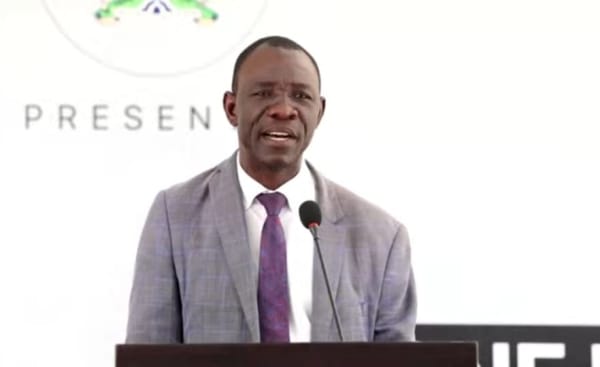
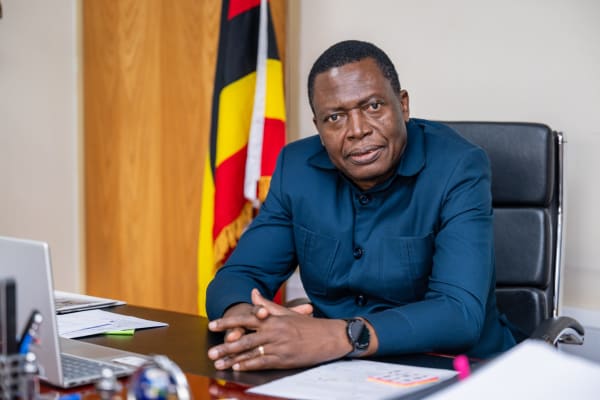
Dr. Diana Atwine, the permanent secretary at the Ministry of Health last week said that they are worried about the presence of the Indian variant in the country since it seems to attack all age brackets including the young ones.
“This variant is not like the disease we knew last year. It attacks the young which was not the case last year with the strain that we had and have grown accustomed to. Young people in India are dropping down in the streets dying. These people are not old, they are young. With 75 percent of our population below the age of 35, this is worrying,” Dr. Atwine said.
B.1.617 has been recorded in at least 17 countries worldwide since first being detected in India, which is currently battling a devastating wave of COVID-19 infections.
In Europe, the UK has been the most affected country, with health authorities recording 193 cases of the variant to date.
Sporadic cases have also been detected in France, Germany, Switzerland, Belgium, Portugal and Spain. On Thursday, Romania reported its first case.
Should you be concerned?
In response to the spread of the variant, a number of governments – including Uganda, the UK, France, Italy, Germany, Belgium and Spain – have issued travel bans or restrictions on arrivals from India.
The moves come as several European nations battle with third waves, with efforts to contain COVID-19 in some areas of the continent hampered by sluggish mass vaccination efforts.
Like in many other places, the new surge in cases in India has a lot to do with increased complacency towards the adherence to Covid-19 preventive measures.
Following the waning of Covid-19 cases across the world, we probably did not keep the social distancing as we should have. And then there were a number of events all over the world where social distancing was not possible in very many countries including Uganda, for example, election campaigns.
As the Ministry of Health has advised therefore, social distance, keep your mask on while in public and wash your hands and sanitize as many times as possible.