Four Kampala Students Die of Severe Malaria; Government Sounds Warning
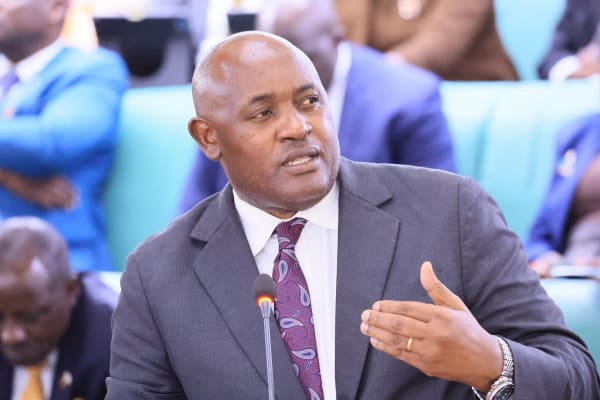
Health Minister Dr Chris Baryomunsi
The Ministry of Health has confirmed that severe malaria killed four students at three schools in Kampala Metropolitan, but said investigations have found no new strain of the disease.
Health Minister Dr Chris Baryomunsi told Parliament on Wednesday that two students died at Makerere College School, while Mengo Senior School and Gayaza High School each lost one learner.
The statement followed concerns raised by Kigulu County South MP Andrew Kaluuya Kiiza, who asked the government to explain reports that a new malaria strain had caused the deaths.
Baryomunsi said the cases occurred in Kampala, which has long recorded low malaria transmission. He explained that children raised in such areas may have limited immunity because they are rarely exposed to the parasite.
The minister said this could leave them vulnerable to severe illness when they become infected. He warned that malaria can worsen within hours if patients fail to receive emergency treatment.
“On behalf of the Ministry of Health, I extend our deepest condolences to families, guardians, school communities and fellow learners of the four learners who have lost their lives. No parent should send a child to school and receive news of this nature,” Baryomunsi said.
He said Uganda continues to monitor the genetic composition of malaria parasites and has found no evidence of a new or more dangerous type.
“Uganda routinely conducts genomic surveillance on circulating malaria parasites. This surveillance has not detected any change in the parasites currently circulating in the country,” he said.
Baryomunsi said Plasmodium falciparum, which causes most malaria infections in Uganda, remains responsible for the cases.
“What has killed these learners is the same parasite that ordinarily causes malaria. It is not a new strain,” he said.
The minister said children in areas with high malaria transmission often develop some immunity after repeated exposure. However, those in Kampala and other low-transmission areas may not build the same protection.
He warned that a child with little immunity could move from the first symptoms to severe malaria within 24 hours.
“An immunologically naive child can progress from first symptoms to severe malaria, including cerebral malaria and anaemia, within 24 hours and from severe malaria to death within two hours if emergency treatment is not accessed in time,” Baryomunsi said.
The Health and Education ministries have formed a joint task force to investigate the deaths and assess malaria cases among schoolchildren.
The government has also started confidential inquiries at the affected schools and issued malaria guidance to schools across the country.
Baryomunsi said authorities would revive health reporting in schools, deploy nurses and health workers in government schools and improve emergency referral systems.