Baryomunsi Distances Himself from Balaam, Nameere Arrest-driven Inspections
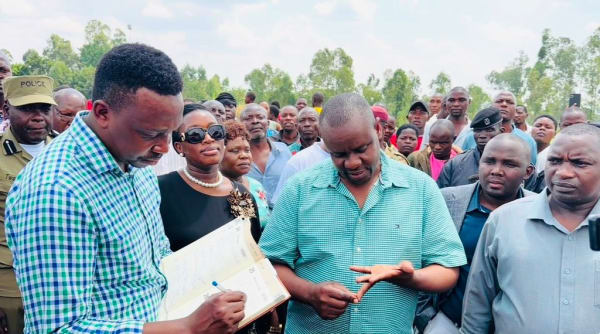
Local Government ministers Balaam Barugahara and Justine Nameere during inspections of public facilities.
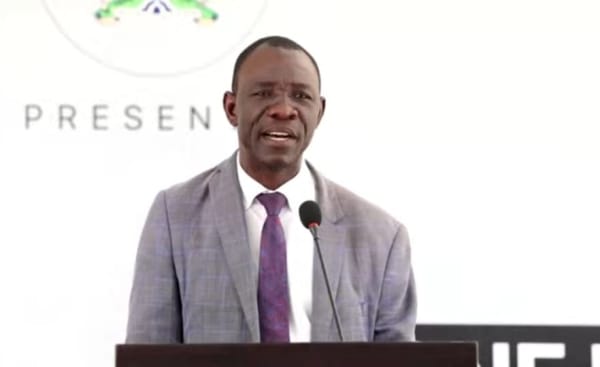
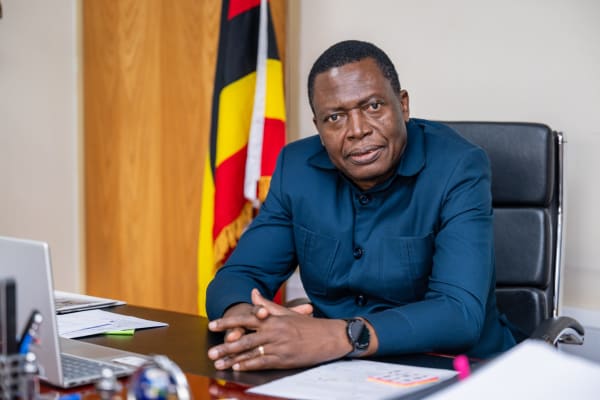
Health Minister Dr Chris Baryomunsi has distanced himself from the approach used by Local Government ministers Balaam Barugahara and Justine Nameere during inspections of public facilities.
Baryomunsi said he prefers supportive supervision to inspections centred on arrests and punishment.
He made the comments during an interview on UBC TV after visiting Mbarara Regional Referral Hospital at night. He found hundreds of patients waiting without medical attention.
Baryomunsi said some people urged him to order the arrest of health workers who had abandoned their duty stations.
“The Minister of Local Government and his Minister of State have used a different style. Because even when I went to Mbarara, people were saying I should cause arrests of the absentee health workers,” he said.
He said his experience in the civil service taught him to identify weaknesses and help institutions correct them.
“But I thought my approach should be different because when I used to work in the civil service, we would do what we call support supervision, not necessarily policing or finding faults,” Baryomunsi said.
“You go to supervise but in a supportive manner; identify where weaknesses are and provide remedies.”
He said arrests may be necessary in serious cases but should not become the main purpose of inspections.
“In extreme circumstances where arrests have to be made, they can be made, but to me it is not the driving force bringing me there,” he said.
Baryomunsi added that he had not discussed the operations with Barugahara and Nameere. He said he did not know how they gathered evidence before ordering arrests.
“The ministers of Local Government are using a different approach; I have not sat with them to know the kind of methodology and the information they gather before they reach a facility,” he said.
“But I have also seen the details in the media causing arrests. But that should depend on the kind of evidence they gather.”
Barugahara and Nameere have conducted surprise inspections across eastern Uganda as part of a campaign against corruption and poor service delivery.
Their operations have targeted absentee workers, ghost employees, inflated school enrolment, misuse of road funds and shoddy public works.
In Mbale District, the ministers questioned staffing records at Naiku Health Centre III after finding only a few workers on duty. They also ordered the arrest of a headteacher accused of inflating pupil enrolment figures.
In Bulambuli District, officials, including engineers, were arrested over suspected misuse of road funds and poor bridge works.
The operations have attracted criticism from some local leaders and the Uganda Institution of Professional Engineers, which has called for proper investigations before arrests.