World Tourism Day: Uganda Joins The Rest Of The World In Celebration, Ten Facts About “The Pearl Of Africa”
Every year, September 27 is celebrated as World Tourism Day. The sector is one of the most important and economically employing sectors, employing one in every tenth person on Earth and for some countries, it can represent over 20 per cent of their GDP.
The day highlights the travel industry’s social, economic, political, and cultural significance. Tourism is one of the most relevant sectors globally as it employs millions of people, which makes them dependent on it for their livelihood.
This year’s World Tourism Day holds more significance as the theme is ‘Tourism for Inclusive Growth’. As the world opens up once again with fewer restrictions, the theme focuses on the importance of inclusive recovery and ensuring that no one is left behind. Additionally, the day also highlights the importance of the travel industry in preserving and promoting culture and heritage.
The official website of UN said, “UNWTO ensures every part of the sector has a say in its future – including communities, minorities, youth and those who would otherwise be at risk of being left behind.”
As Uganda celebrates World Tourism Day with the rest of the world, here are a few interesting facts about the country famously known as “The Pearl of Africa”:
1. Uganda is a landlocked country in East Africa, bordered by Kenya in the East, in the north by South Sudan, in the West by the Democratic Republic of the Congo, in the southwest by Rwanda, and in the south by the Republic of Tanzania. The southern part of the country includes a substantial portion of Lake Victoria, which is also shared by Kenya and Tanzania.
2. Uganda takes it’s name from the Buganda kingdom, which encompasses a large portion of the country including the great capital city Kampala.
3. The people of Uganda were hunter-gatherers until 1,700 to 2,300 years ago, when Bantu-speaking populations migrated to the southern parts of the country. Uganda gained independence from Britain on 9 October 1962. The official languages are English and Swahili, although multiple other languages are spoken in the country.
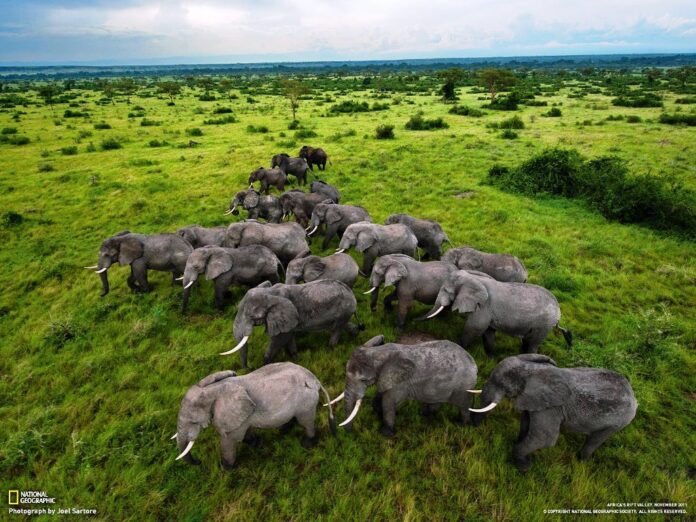
4. Uganda is a multicultural country whose diverse landscape encompasses the snowcapped Rwenzori Mountains and immense Lake Victoria – the principal source of the great River Nile. With abundant wildlife such as Chimpanzees, Gorillas, famous Big 5 at our 10 Savannah parks, and 1000+ rare bird species. Bwindi Impenetrable Forest National Park is a renowned mountain gorilla sanctuary, while Kidepo Valley National contends for best destination in Africa for wild game drives.
5. Its surface area more than 26,000 square miles, Lake Victoria (named for Queen Victoria) is the biggest lake on the continent of Africa and the globe’s second largest freshwater lake, trailing North America’s Lake Superior.
6. Uganda Embraces several eco-systems, ranging from tall volcanic mountains, densely forested swamps of Albert Nile to the rain forests of the country’s central plateau.
7. Uganda is home to one of the World’s smallest churches, measuring in at 8 ft tall and 250 centimeters wide, a chapel on Biku hill has just enough room inside for 3 churchgoers – including the pastor. There are points surrounding the church that are designated for meditation, prayer, and worship.
8. Earth’s equator is an imaginary line dividing the North and South hemispheres. There are only a few countries that the equator runs through, including the Democratic Republic of Congo. In Uganda, the equator is located 75 km south of Kampala, where you can purchase memorabilia and watch cool equator water experiments.
9. Uganda was named the “Pearl of Africa” by Winston Churchill, one of the earliest tourists to the country in 1907.
“For magnificence, for variety of form and color, for profusion of brilliant life — bird, insect, reptile, beast — for vast scale — Uganda is truly the Pearl of Africa.” -Winston Churchill
10. Talking food, the street-side Rolex might sound like one of the most exclusive watch brands in the world, but for Ugandans, the term encapsulates the true meaning of affordability and convenience. With a chapati wrapped filled with eggs, nyanya mbisi (sliced raw tomatoes), cabbage, onions and green pepper, the Rolex, served in a trasparent kaveera (polythene), still remains Uganda’s number one food export on the international market.