When the law fails, justice is held hostage

Judith Patricia Byangango & Fortunate Chilenje | LLM Candidates, class of 2025 LLM - Human Rights and Democratisation in Africa Center for Human Rights, Faculty of Law University of Pretoria
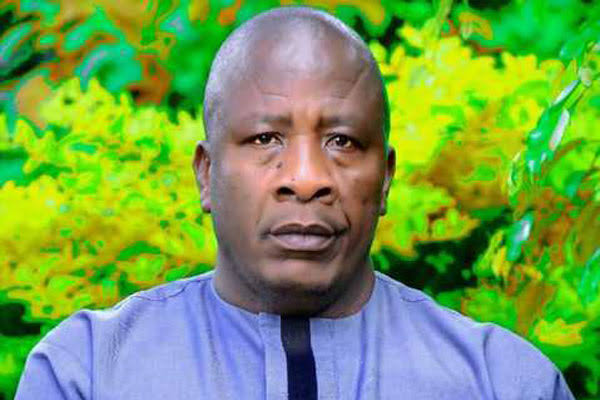
In a functioning democracy, the law is a safeguard not a weapon. But in Uganda today, the unfolding legal drama surrounding Dr Kizza Besigye and his co-accused, Hajji Obeid Lutaale, reads like a textbook case of how judicial systems can be bent into tools of political persecution.
This is not the first time Dr Besigye, a long-time opposition leader and four-time presidential candidate, has been dragged through Uganda's legal machinery. But never before has the process been this convoluted, this constitutionally alarming, or this internationally disgraceful.
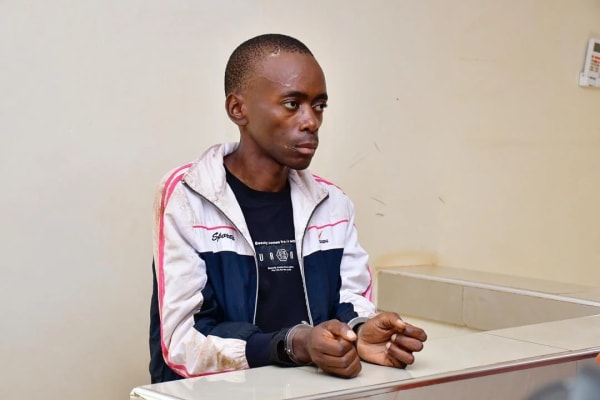
It began on 16 November 2024, when Besigye and Lutaale were abducted in Nairobi, Kenya a blatant case of extraordinary rendition. Lured under false pretences, they were seized by individuals posing as Kenyan police, handed over to the Ugandan military, and forced across the Malaba border. No extradition hearing. No legal procedure. Just brute force cloaked in silence.
Days later, on 20 November, they were arraigned before Uganda's General Court Martial in Makindye despite being civilians, on dubious charges including unlawful possession of weapons and attempts to seek arms abroad. This move blatantly violated article 23(1), (4), 28(1), 221 and 120 (3) (c) of the Constitution of Uganda and international human rights norms including the International Covenant on Civil and Political Rights, all of which bar arbitrary detention, extraordinary rendition, and military trials of civilians.
Worse, they were held incommunicado for days, denied access to lawyers and family, a critical breach of due process before being remanded to Luzira Prison.
The legal circus continued. On 7 January 2025, the military arrested defence lawyer Eron Kiiza in a sham process, convicted him summarily, and sentenced him to nine months in Katalya prison. On 31 January, Uganda's Supreme Court ruled that military courts had no jurisdiction over civilians and ordered such cases transferred to civilian courts a landmark judgment that should have ended the military farce. It did not.
Besigye, already in frail health, began a hunger strike to protest his continued detention without a valid remand warrant. He collapsed, was hospitalised, and yet was returned to prison without meaningful intervention. Public outcry forced the case into the civilian court, but by then, the damage was visible on his body and Uganda’s judicial integrity.
On February 21, they were formally charged with treason and misprision of treason at Nakawa Chief Magistrate’s Court. The indictment claimed they plotted to overthrow the government between 2023 and 2024 through meetings in Switzerland, Kenya, Greece, and Uganda.
As the legal spectacle grew, the prosecution escalated matters with an application to access and forensically analyse the phones of Besigye and his co-accused, citing national security concerns. The defence challenged this move and requested to cross-examine Detective Benedict Odyek, whose affidavit supported the application. The prosecution objected, arguing that public cross-examination could compromise ongoing investigations. Chief Magistrate Esther Nyadoi ruled in favor of the state, ordering that the cross-examination take place behind closed doors. In response, the defence applied for a High Court review, which was granted, halting the phone access proceedings. The matter was adjourned for further directions.
On 11 April, High Court Judge Rosette Kania denied Besigye and Lutaale bail despite their meeting all legal requirements. The judge cited the seriousness of the offence and national security, sidestepping the constitutional presumption of innocence and the fact that the alleged crimes were unproven and politically coloured.
Frustrated by delay, the defence filed a second bail application on 22 April. By May 14, it had not been scheduled despite the best practice threshold mandating that such applications be addressed within 30 days. Again, the judiciary was silent. Again, justice was postponed.
By 21 May, the state escalated further, presenting a fanciful nine-page indictment accusing Besigye of planning drone strikes against the president. The case was committed to the High Court.
On June 13, the defence sought the recusal of Chief Magistrate Christine Nantege, citing bias, incompetence, and failure to enforce the constitutional limit on pre-trial remand. Unlike previous threats, this time the defence formally lodged a complaint with the Judicial Service Commission.
Then came June 26, a pivotal day. Magistrate Nantege dismissed the prosecution’s application to hack the phones, citing lack of jurisdiction. She also declined to rule on the request for her own recusal, arguing that the motion had arisen from an application over which her court had no jurisdiction.
This is not the rule of law. It is procedural evasion. Judicial corwadice. A legal maze with no exit, except, perhaps, for those pulling the strings.
So where is justice?
It lies buried under delayed hearings, unconstitutional detentions, and judicial evasion. It lies bruised in the prison cell where Besigye and Lutaale has spent months without trial. It lies shamed in the courtroom where a judge refused to acknowledge her own bias because, technically, the issue was “out of jurisdiction.”
When courts delay justice, they deny justice. When judges claim lack of jurisdiction to dodge accountability, they surrender moral authority. And when politically sensitive cases are handled with this much procedural evasion and legal acrobatics, it is not only the accused who stands trial, but the entire system itself.
Dr. Besigye’ and Lutaale’s ordeal is not just about a political figure targeted by the state. It is about what happens when power crushes process. When the Constitution is optional. When the bench bows.
Uganda’s judiciary now faces a moment of reckoning. Will it reclaim its independence or cement its role as an enabler of political persecution?
The answer matters not just for Uganda, but for every society where courts are the last line of defence against tyranny.
The world is watching.