UPDF Establishes Advanced Laboratory to Combat Biological Threats to Troops
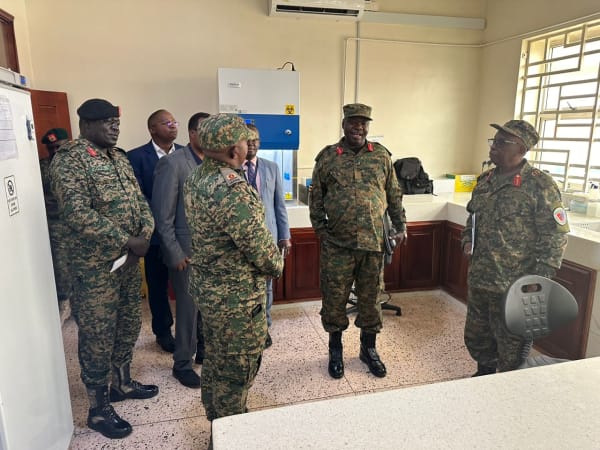
The inauguration ceremony was conducted by Lt Gen Sam Okiding, Deputy Chief of Defence Forces, on behalf of Gen Muhoozi Kainerugaba, Chief of Defence Forces.
The Uganda Peoples’ Defence Forces (UPDF) has taken a significant leap forward in its health and defense capabilities with the opening of a cutting-edge biosafety level 2-plus laboratory in Mbuya. This initiative marks a first among East African armed forces, emphasizing Uganda's commitment to the modernization and safety of its military personnel.
The inauguration ceremony was conducted by Lt Gen Sam Okiding, Deputy Chief of Defence Forces, on behalf of Gen Muhoozi Kainerugaba, Chief of Defence Forces. Gen Okiding addressed the gathering, underscoring the laboratory's crucial role in the strategic health protection of the troops. He highlighted the facility's capacity to mitigate a spectrum of biological threats that soldiers might encounter in both domestic and international operations.
Maj Gen Dr. Ambrose Musinguzi of the Joint Staff Health Services expressed appreciation for President Yoweri Kaguta Museveni's pivotal role in funding the project. He noted that the laboratory aligns perfectly with the President’s broader vision of continuously modernizing the military and enhancing its medical research facilities.
Dr. Allan Muruta, Commissioner of Epidemiology and Surveillance at the Ministry of Health, praised the UPDF-Ministry collaboration. He committed to continued support from the Ministry, reinforcing the joint effort in healthcare delivery and contributing to global health security.
The new Rear Public Health Laboratory is not just a medical facility but a hub for advanced research and disease surveillance. It is equipped with sophisticated molecular and immunological platforms that will handle samples from over twenty sentinel sites within Uganda and from regions where UPDF troops are stationed overseas, including Somalia, Equatorial Guinea, and the Democratic Republic of Congo.
This laboratory is also a critical component of a wider network designed to track and manage emerging and re-emerging infectious diseases such as Ebola, Marburg, yellow fever, Chikungunya, Crimean-Congo haemorrhagic fever, and dengue. The establishment of this facility addresses the unique risks faced by military personnel who frequently come into contact with potential biohazards through vectors, the environment, and animal reservoirs.