UN Human Rights Council Adopts Uganda's Resolution on Enhancing International Cooperation in Human Rights
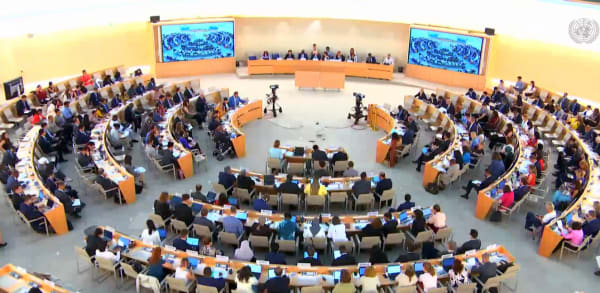
The Human Rights Council
The UN Human Rights Council has adopted a resolution titled "Enhancing International Cooperation in the field of Human Rights," presented by Uganda on behalf of the Non-Aligned Movement (NAM). Following weeks of both informal and formal consultations, the resolution was put to a vote, garnering 31 votes in favor, 13 against, and 2 abstentions.
In introducing the resolution, Deputy Permanent Representative of Uganda to the UN, Ambassador Arthur Kafeero, emphasized the collective commitment to promoting international cooperation among UN Member States in the field of human rights. "Uganda recalls that the COVID-19 Pandemic that impacted many, demonstrated that no State can efficiently thrive without cooperation with others," he said. He added that the NAM resolution reaffirms the duty of States to cooperate with one another in accordance with the Charter of the United Nations, and that dialogue among and within cultures and civilizations facilitates the promotion of a culture of tolerance and respect for diversity. Ambassador Kafeero further stated that the resolution urged the High Commissioner to prioritize regional seminars on the contribution of North-South, South-South, and triangular cooperation to the enjoyment of all human rights, including the right to development.
The resolution faced opposition from the European Union (EU) and the United States. Speaking on behalf of the EU, the representative of Belgium thanked Uganda for coordinating the negotiations but expressed concerns over language in the text that had not been endorsed by UN membership, such as the New International Economic Order (NIEO) and terms related to terrorism. He argued that these terms did not sufficiently address human rights, international law, and international refugee law, which should frame the fight against terrorism. Belgium also questioned the value of regional seminars given the current liquidity crisis in the UN and concluded by expressing a willingness to engage in future dialogue with NAM to achieve consensual language and approach.
The United States representative echoed similar concerns, stating that her country remains committed to the protection of human rights globally but objected to controversial language in the resolution. She highlighted longstanding objections to terms like Universal Coercive Measures (UCMs), which lack internationally agreed definitions, and opposed the suggestion that states bear responsibility for the human rights obligations of other states. The US representative reaffirmed the country's commitment to achieving the Sustainable Development Goals (SDGs) but maintained a firm stance against the language on the Right to Development (RTD).
Argentina, while commending Uganda for its consultative approach, abstained from the vote. The Argentine representative noted concerns about using terms without UN consensus, such as NIEO and UCMs, which they felt could justify human rights abuses.
The resolution's adoption marks a significant moment in the UN Human Rights Council's efforts to enhance international cooperation in human rights, despite the divided opinions among its members.