President Museveni has reassured the country that Uganda is set to surpass the low income into the middle income status in the next financial year.
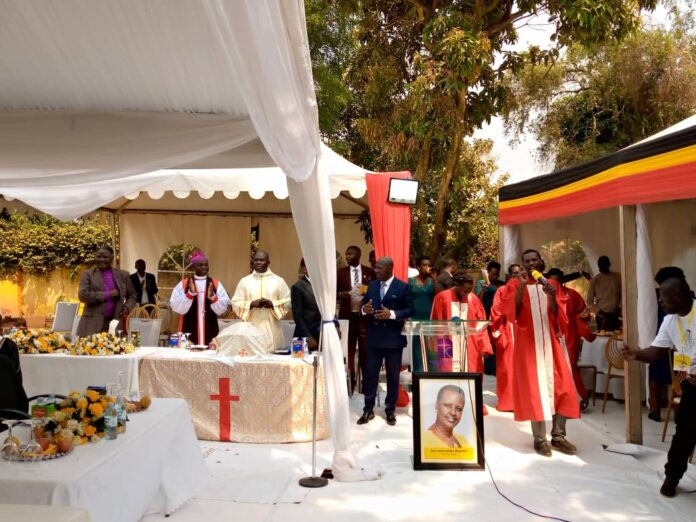
Museveni was speaking at the 37th liberation anniversary in Kakumiro district on Thursday where he said that the country has already attained the middle income status but has to do so for a consecutive three years for it to be recognized internationally as one.
“To enter the middle-income category, you need a GDP per capita of 1,039$. This is now the 2nd financial year we have been in that category. You need 3 years, consecutively, to be recognized,” Museveni said.
“Our economy has grown from a miserable $1.5 billion in 1986, to $48 billion by end of June 2023,” he remarked, adding that “all these are low targets which Uganda will easily surpass.”
On 7 June 2022, during the state of the nation address, Museveni announced that Uganda had achieved middle income status, with GDP per capita at $1046 at the end of the 2021/22 financial year – exceeding the World Bank threshold by just one dollar, a claim that World Bank officials quickly refuted. The World Bank explained that the country’s per capita income calculations were based on GNI per capita rather than GDP, which was erroneous.
Now, as the National Resistance Movement celebrated its 37th liberation day, Museveni reaffirmed his statements about the country’s economic growth, saying that Uganda’s economy which currently stands at $45.7billion is expected to soar to $48billion by the end of June 2023, up from $1.5billion in 1986 when he captured power.
Museveni maintains (amidst gloomy statistics as the country entered 2023 with a public debt stock rising beyond Shs 86trillion) that the country can easily hit these targets if the right priorities are set.
“You remember my admonitions about losing value through the export of raw-materials. This low middle-income economy we are now talking about, is still, actually, mainly a raw materials producing economy, where for a kilogram of $5 coffee, we get $2 for bean coffee while the wiser foreigners who roast the coffee, grind it and pack it for sale in supermarkets, get 50 for the same kilogram,” the President said.
He reiterated that Ugandans must engage in the four pillars of wealth creation to that end.
“Every adult must engage in the four sectors of wealth creation that include commercial agriculture, industrialization, service provision and ICT.”
He added that this shouldn’t be a difficult task since “We now have the electricity and we are adding more, we have the varied and massive raw materials and, increasingly, we have the entrepreneurs – local and foreign and we have the African market that we have put in place with our Pan-Africanist Comrades.”
The World Bank assigns every country to one of four income categories: low, lower-middle, upper-middle or high. These categorisations are updated every year, based on data that measures a country’s Gross National Income (GNI) per capita in US$ against the thresholds for each category established by the bank.
Uganda, according to these metrics, still lies in the low income status.