Uganda Wildlife Report Shows Recovery for Some Species, Fresh Threats for Others
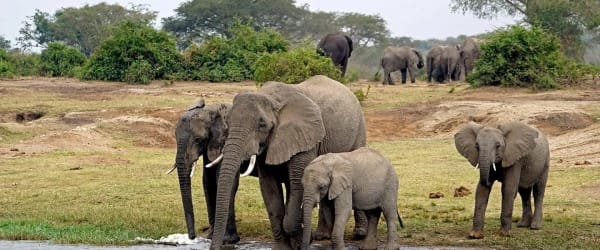
Elephants remain vulnerable to poaching for ivory and bushmeat
Uganda’s newly released State of Wildlife Resources Report 2026 paints a mixed picture of the country’s conservation efforts, showing strong recovery in several wildlife species but warning that poaching, habitat loss and human activity continue to threaten long-term gains.
The report by the Uganda Wildlife Authority (UWA) highlights improvements in the populations of several medium and large mammals, including kob, impala, buffalo, zebra, eland, topi, giraffe, waterbuck, hartebeests, hippopotamus and southern white rhinoceros.
Officials say these gains reflect years of investment in wildlife protection, stronger ranger deployment, community cooperation and the use of modern technology in conservation.
Uganda was once considered Africa’s leading safari destination, surpassing Kenya and Tanzania in wildlife-based tourism during the 1960s.
That success was badly damaged by political instability and civil conflict between 1971 and 1985, when poaching increased sharply and wildlife populations collapsed.
Elephants, lions and other large mammals were heavily targeted, especially during years of armed conflict when abandoned weapons were used for illegal hunting.
The report notes that conservation efforts over the past decades have helped restore many species, but some have recovered faster than others.
UWA Executive Director Dr James Musinguzi said improved monitoring systems have played a major role in wildlife protection and management.
He said tools such as SMART patrol systems, EarthRanger software, aerial wildlife surveys, camera traps and species databases have strengthened ranger work and improved response to threats.
“The advances are indicative of enhanced patrol, species recovery, and restocking provision plans, ranger presence, community cooperation, and increasing use of technology-supported monitoring tools,” Musinguzi said.
He added that benefit-sharing projects and human-wildlife conflict mitigation programmes have also helped improve coexistence between communities and wildlife in high-pressure areas.
Despite progress, the report warns that elephants, lions, leopards, ostrich, bushbucks and oribi continue to face delayed recovery or decline in some regions.
Elephants remain vulnerable to poaching for ivory and bushmeat, while lions are increasingly threatened by poisoning, illegal trade in body parts and retaliatory killings linked to livestock attacks.
The report also notes that lions remain critically endangered on Uganda’s National Red List.
Human activity remains one of the biggest threats to wildlife survival.
Tourism Minister Tom Butime said Uganda’s wildlife is under rising pressure from habitat loss, land fragmentation and expanding human settlement.
He said agriculture, plantation farming, construction, industrialisation, land reclamation, extraction activities and invasive plant species are changing wildlife movement patterns and damaging ecosystems.
“Habitat loss and fragmentation, illegal wildlife use, invasive alien and problematic native plant species proliferation, climate-induced extremes, and increasing human-wildlife conflict have continued to pose serious challenges,” Butime said.
He warned that these pressures threaten not only wildlife but also tourism income, food security, community livelihoods and Uganda’s broader economic resilience.
Wildlife tourism remains one of Uganda’s biggest foreign exchange earners and a major pillar of the national economy.
Officials say protecting wildlife is not only about biodiversity but also about jobs, investment and national development.
The report calls for stronger regional cooperation, especially for migratory species such as elephants, whose movements often cross national borders.
As Uganda works to protect its wildlife heritage, the report shows that conservation gains are real, but they remain fragile and require sustained investment and public support.