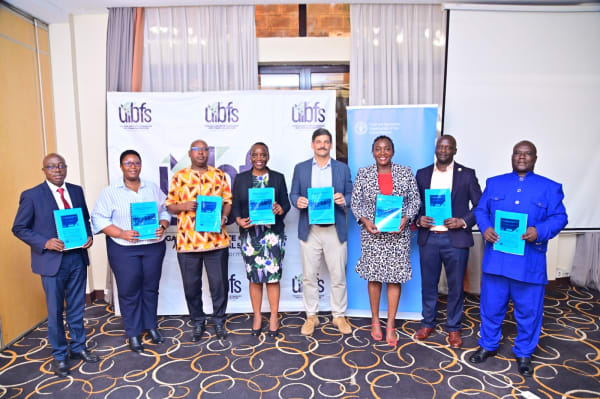
The Bank of Uganda (BoU), in partnership with the International Fund for Agricultural Development (IFAD), has launched a new remittances data collection form to reduce the cost of sending money to Uganda.
Unveiled at the 8th National Remittances Stakeholder Network workshop on 15 April 2025, this initiative aims to improve data capture and usage, providing better insights into remittance flows.
The form will be used by all remittance service providers, including commercial banks and local money remittance providers, starting with weekly submissions over the next two months.
BoU’s Director for Statistics, Mrs. Milly Nalukwago Isingoma, emphasised the importance of granular, transaction-level data for evidence-based policymaking. “By moving towards detailed data reporting, we can support strategies to reduce remittance costs,” she said. The average cost of sending money to Uganda currently stands at 15%, far above the global target of 3%. This initiative aims to address high costs, especially in corridors like Tanzania to Uganda, and improve financial inclusion for Ugandans.
Remittances have become a key economic driver for Uganda, with annual inflows reaching USD $1.4 billion—almost five trillion Uganda shillings. This makes them critical for poverty alleviation and economic stability, especially in rural areas. Mr. Mohammed El-Ghazaly, IFAD’s Country Representative in Uganda, praised remittances for their transformative power and urged stakeholders to maximise their potential.
The collaboration between BoU, IFAD, and the Uganda Bankers' Association (UBA) is expected to enhance the efficiency and affordability of remittances, benefiting Ugandans both at home and abroad. This data collection effort forms part of a broader strategy to foster financial inclusion and improve Uganda’s remittance landscape.