Uganda Signs MoU With Starlink Ahead of Internet Service Launch
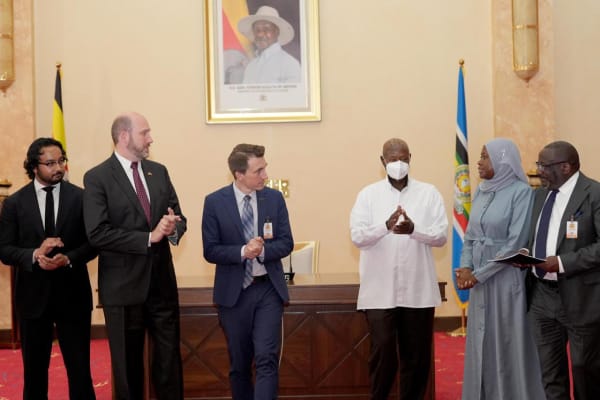
The President said government’s main concern was security, accountability and compliance with Uganda’s laws.
Uganda has signed a Memorandum of Understanding and operational licence agreement with Starlink, paving the way for the satellite internet provider to begin operations in the country.
President Yoweri Museveni announced the development on May 15, 2026, saying he witnessed the signing between the Uganda Communications Commission (UCC) and Starlink.
The agreement marks a major step in Uganda’s push to expand internet access, especially in remote and underserved areas.
“I witnessed the signing of the Memorandum of Understanding and operational licence agreement between the Uganda Communications Commission and Starlink, marking an important step towards the commencement of their operations in Uganda,” Museveni posted on X.
The President said government’s main concern was security, accountability and compliance with Uganda’s laws.
“Our interest is security, revenue assurance, and proper accountability within the telecommunications sector so that we know who is operating and who the customers are. I am pleased that Starlink has agreed to comply with Uganda’s laws and regulatory requirements as it prepares to begin service delivery in the country. I wish them good luck,” Museveni said.
The agreement follows weeks of negotiations involving Starlink executives, officials from the Ministry of ICT, UCC and Uganda’s Permanent Representative to the United Nations, Adonia Ayebare.
Last month, Ayebare revealed that Starlink was preparing to enter Uganda as part of growing commercial cooperation between Uganda and the United States.
He said the satellite internet service, owned by Elon Musk’s SpaceX, would provide nationwide coverage, including hard-to-reach districts such as Karamoja, Isingiro and Kitagwenda.
“We’re about to get Starlink here… which is satellite internet that will cover the whole country, and that will contribute immensely to economic development, to education, to health,” Ayebare said at the time.
Officials believe the service will help connect schools, health centres, tourism sites and businesses in areas with poor internet infrastructure.
Government earlier directed regulators to fast-track the licensing process after discussions at State House Entebbe. Talks reportedly focused on licensing fees and the type of licence Starlink would operate under, since the company provides data services through low-Earth orbit satellites rather than traditional telecom infrastructure.
Starlink also reportedly committed to creating jobs, paying taxes and supporting innovation in Uganda’s digital economy.
Uganda’s internet penetration remains low, especially in rural areas where many communities face high internet costs and weak network coverage.
The entry of Starlink is expected to complement existing fibre and mobile internet services while improving connectivity in remote parts of the country.
Uganda now joins countries such as Kenya, Rwanda and Nigeria that have already licensed or engaged Starlink to expand digital access.