Uganda's Refugees Face Dire Consequences as Aid Cuts Deepen
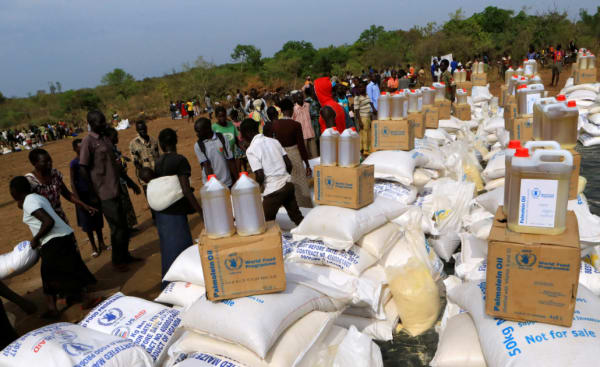
Refugees in Uganda are food rationing
In Uganda, refugees are resorting to increasingly desperate measures to support themselves and their families due to significant reductions in humanitarian aid, with research indicating that the most severe impacts of these cuts have yet to manifest.
The strain is putting unprecedented pressure on refugee social networks, which are struggling to compensate for the shortfall left by aid organizations.
The country's progressive open-border policies and refugee self-reliance model have been lauded globally. However, the recent influx of refugees combined with substantial cuts in humanitarian funding is pushing Uganda's capacity to its limits. The current financial constraints mean that many of the nation's 1.5 million refugees now receive less than 40% of the essential survival rations, with some receiving even less or none at all.
A recent study by the New Humanitarian points to the wide-ranging effects of funding cuts and the potential long-term impacts that are often overlooked.
As aid diminishes, the study shows, refugees are increasingly relying on their local and transnational social networks for support, showcasing their resilience and communal spirit.
The reduction in food rations, orchestrated by the World Food Programme due to a grim funding outlook, has introduced a tiered system of aid distribution based on vulnerability.
Yet, the categorization often misaligns with the actual needs of refugees, primarily from the Democratic Republic of the Congo and South Sudan, creating fear, anxiety, and uncertainty.
This situation has led to a spike in negative coping strategies among refugees, such as child marriage and prostitution, and an alarming increase in suicide rates attributed to the scarcity of basic needs.
“Our observations indicate that the reliance on social networks is not only a temporary fix but also a fragile one that risks breaking down under continuous strain. This breakdown can lead to long-term damage to refugees' ability to achieve self-reliance and maintain social and economic stability,” the researchers noted.
Despite the belief among humanitarian actors in the refugees' capacity for self-reliance, our research suggests that overdependence on social networks, without considering their inherent vulnerabilities and dynamics, could further jeopardize refugees' prospects for self-sufficiency.