Uganda’s Justice Julia Sebutinde Faces International Backlash Over Surprise Ruling On Gaza War
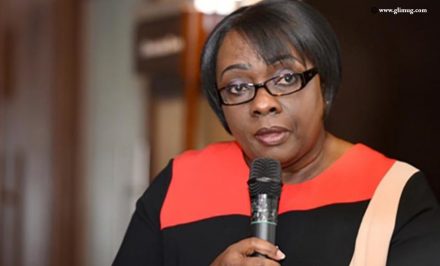
Justice Julia Sebutinde
Uganda found itself in a solitary position on the international stage as the International Court of Justice (ICJ) issued a ruling instructing Israel to take all necessary measures to prevent death, destruction, and acts of genocide in its military operations in Gaza.
The case, brought forward by the South African government, claimed that Israel's actions in Gaza amounted to genocide and sought a court order to cease the operation.
Out of the 17 judges on the panel, all but one ruled in favor of South Africa's request for six provisional measures to safeguard Palestinians in Gaza.
Justice Sebutinde of Uganda was the exception, dissenting against all six measures. Even an Israeli judge on the panel voted in favor of two of the proposed measures.
In her dissenting opinion, Sebutinde argued, "In my respectful dissenting opinion, the dispute between the State of Israel and the people of Palestine is essentially and historically a political one. It is not a legal dispute susceptible to judicial settlement by the Court."
Sebutinde also stated that South Africa failed to demonstrate that the alleged acts committed by Israel had the "necessary genocidal intent" and therefore did not fall within the scope of the Genocide Convention.
Criticism of Justice Sebutinde, the first African woman to serve as an ICJ judge, was widespread for her unexpected ruling. Some on social media even called for her arrest.
"I think what the dissenting opinion gets wrong is that genocide is not a political dispute, it’s a legal matter," remarked Mark Kersten, an assistant professor at the University of the Fraser Valley. "Both South Africa and Israel signed the Genocide Convention in 1948 and accept the jurisdiction over breaches of the Genocide Convention and failure to prevent genocide."
The backlash extended to government officials, with Uganda's ambassador to the United Nations, Amb. Adonia Ayebare, emphasised that Sebutinde's ruling was her own prerogative and did not reflect the government of Uganda's position on the Palestinian situation. Ayebare stressed Uganda's support for the Palestinian cause and highlighted the country's voting pattern at the United Nations.
It is worth noting that Uganda recently assumed leadership roles in the Non-aligned Movement and G77 forum, where the Israeli-Palestinian conflict was passionately discussed.