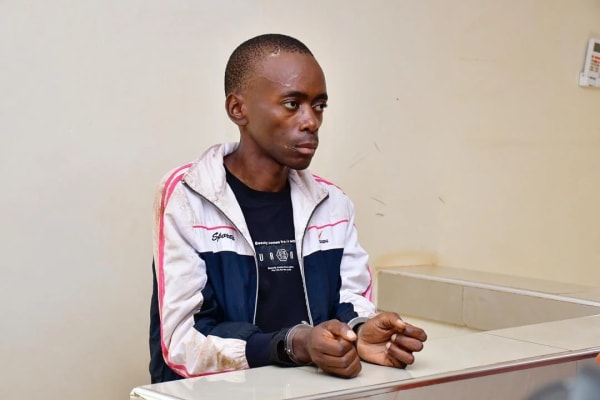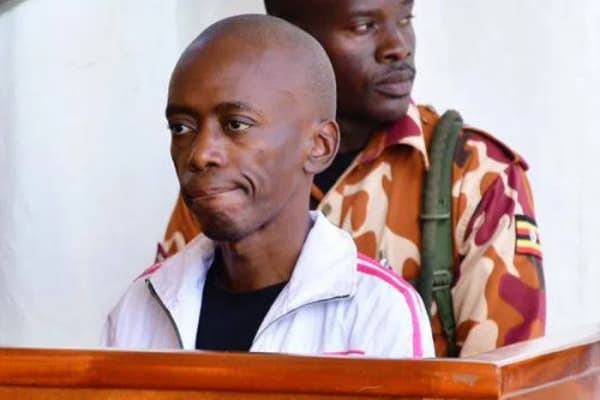
The High Court has condemned Christopher Okello to death following his conviction for the brutal murder of four children, marking the conclusion of one of Uganda’s most shocking criminal cases in recent history.
Justice Alice Komuhangi Khauka delivered the sentence on Tuesday evening, just hours after finding Okello guilty on four counts of murder. She ruled that the case qualified as one of the “rarest of rare” offenses warranting capital punishment.
Court rules case meets highest legal threshold
In her sentencing remarks, Justice Khauka stated that she had carefully balanced the mitigating factors presented by the defense against the aggravating circumstances highlighted by the prosecution.
“Under our sentencing guidelines… a court may impose the death sentence in exceptional circumstances, in the rarest of rare cases where life imprisonment or other custodial sentences are clearly inadequate,” she said.
She acknowledged the defense’s argument that Okello came from a dysfunctional family but concluded that the sheer gravity of the crime outweighed this factor.
“This offense was brutal, heinous, and gruesome. The families of the deceased and the entire nation continue to grieve the deaths of the four children on April 2, 2026,” she ruled.
Justice Khauka noted that the evidence showed the crime was carefully planned.
“I find that the convict meticulously and with great sophistication planned and premeditated this offense. He attacked defenseless, innocent children who relied on adults for protection,” she said.
She also pointed to Okello’s courtroom behavior, observing his refusal to show remorse.
“I have considered that the convict has shown no remorse at all. I would have expected an apology to the families, but he chose not to give one,” she added.
The judge concluded that no lesser punishment would serve justice.
“I agree with the prosecution that this case falls under the rarest of rare category… I hereby sentence him to suffer death.”
Prosecution welcomes the ruling
State prosecutors, led by Chief State Attorney Jonathan Muwaganya from the Office of the Director of Public Prosecutions, applauded the sentence.
“We are pleased with the court’s verdict on each of the four counts,” Muwaganya said.
He noted that while Uganda no longer enforces a mandatory death penalty, courts retain the discretion to impose it in exceptional cases.
“It is our considered prayer that the ends of justice will best be served by passing the highest sentence,” he stated.
Defense lawyer Sarah Awelo urged the court to consider Okello’s personal circumstances.
“The convict is a first-time offender with no prior convictions. He suffers from sickle cell disease and could still be productive to the community,” Awelo said.
She added that he came from a “broken, dysfunctional family” and had plans to engage in farming.
Nevertheless, the court found these factors insufficient given the severity of the crimes.
When given the chance to address the court, Okello declined to speak.
The judge twice invited him to comment on whether the maximum sentence should be imposed, but he remained silent.
Asked if he wished to apologize to the families or the nation, he replied that he had nothing to say