Uganda Rolls Out Climate Smart Agricultural Transformation Project
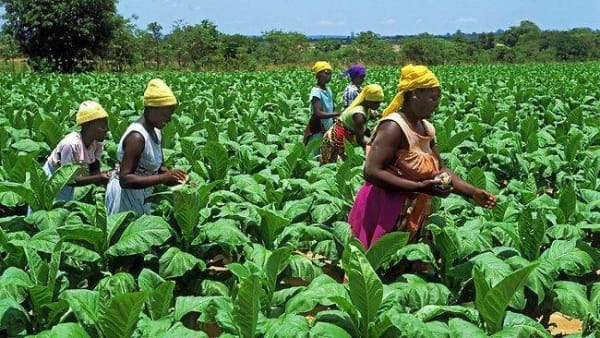
Ugandan farmers are to benefit from the program
Farmers to reap big as
The Government has embarked on the implementation of the newly launched Uganda Climate Smart Agricultural Transformation Project (UCSATP), an ambitious initiative to promote sustainable agriculture and improve livelihoods.
The project is now operational, covering 13 subregions and 69 districts, including seven refugee-hosting areas. The six-year project, spearheaded by the Ministry of Agriculture, Animal Industry, and Fisheries (MAAIF), is expected to benefit millions of Ugandans by enhancing agricultural productivity, market access, and resilience against climate challenges.
Speaking about the project, Alex Asiimwe, Deputy Project Coordinator, noted its transformative potential for Uganda’s agricultural sector.
“This project is designed to not only boost productivity but also align with global climate action goals. We aim to create a system that benefits farmers while addressing environmental challenges,” he said.
The UCSATP, approved by the World Bank in December 2022 and operational since June 2024, has a total budget of USD 354.7 million. Of this, USD 350 million comes from external funding, including a USD 325 million loan and a USD 25 million grant, with the Ugandan government contributing USD 4.7 million.
The project targets 3.9 million direct beneficiaries and 9.5 million indirect beneficiaries, with a focus on empowering women, refugees, and host communities. It supports value chains including crops like coffee, cocoa, cassava, and mango, livestock such as dairy and beef, fisheries, and beneficial insects like bees and black soldier fly larvae.
“This initiative will not only increase agricultural productivity but also ensure resilience in value chains by focusing on sustainable practices,” Asiimwe explained.
The project operates on a matching grants model, where farmers contribute 20% of project costs and the Ministry covers 80%. For refugee-hosting districts, the grants are fully funded by the project. Farmers must belong to organised groups to access the inputs and support provided.
“We are investing in seed multiplication for crops, livestock, and fisheries. This will ensure quality inputs for farmers,” Asiimwe said, adding that training for farmers is set to begin in December 2024, with input distribution planned for March 2025 to align with the planting season.
Climate and Environmental Focus
A critical aspect of the UCSATP is its focus on carbon-smart agriculture to address the environmental impact of farming. Studies show that agriculture contributes up to 30% of global greenhouse gases, a challenge the project seeks to mitigate by promoting environmentally friendly practices such as tree and swamp protection.
“Our project is about more than productivity—it’s about sustainability,” Asiimwe emphasised. “We will invest in practices that reduce greenhouse gas emissions while enhancing resilience in agriculture.”
MAAIF is the lead implementing agency, supported by the National Agricultural Research Organisation (NARO) and the National Animal Genetic Resources Centre (NAGRC). Oversight is provided by the National Project Steering Committee (NPSC) for policy guidance and the National Project Coordination Unit (NPCU) for day-to-day operations.
The project also leverages local governance through Zonal Coordination Committees and District Coordination Structures to ensure effective implementation. “With this structure, we can deliver results that are meaningful and impactful at the grassroots level,” Asiimwe said.
The UCSATP aims to position Uganda as a leader in sustainable agriculture, blending productivity with environmental responsibility. “Our ultimate goal is to create a resilient agricultural system that not only enhances livelihoods but also ensures Uganda’s competitiveness in global markets,” Asiimwe concluded.
The project’s holistic approach is expected to pave the way for sustainable agricultural practices, benefiting millions and ensuring long-term economic growth for Uganda.