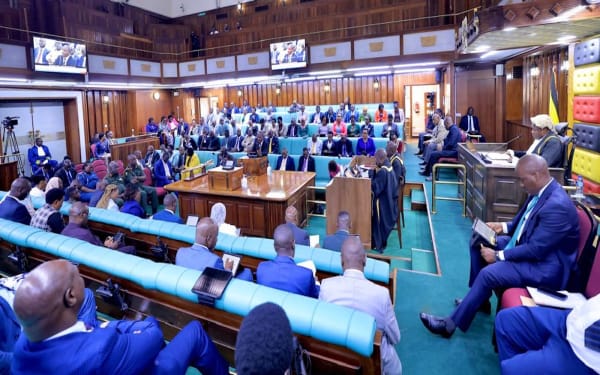
Uganda Engages Diaspora in Educational Reform Dialogue

Amanya Mushega the commission chairman speaks during the meeting
Yesterday, the Uganda High Commission in Nairobi was the venue for a dialogue between the Education Policy Review Commission (EPRC) and members of the Ugandan Diaspora.
This gathering aimed to harness the diaspora's insights based on their experiences with the Kenyan education system, to inform Uganda's ongoing education reform.
The diaspora participants included Ugandan professionals, students, and staff from the High Commission, all of whom shared their perspectives on potential improvements to Uganda's educational landscape.
The consultation, led by Hon. Amanya Mushega and supported by a dedicated team of eight technical officers from the EPRC, was part of a broader initiative to evaluate Kenya's educational achievements for potential adaptation in Uganda. Throughout their week-long exploration in Kenya, the team visited the Kenyan Ministry of Education among other educational entities, seeking inspiration and models for reform.
This engagement is part of a larger, 12-month review process initiated by Uganda's Ministry of Education and Sports in May 2022. The project's objectives are multifaceted, aimed at identifying key issues within the education and sports sectors, generating practical recommendations, and developing a White Paper to guide future policy. The ultimate ambition is to revamp Uganda's education and sports infrastructure, aligning it with 21st-century demands and opportunities.
Uganda's current education system spans seven years of primary education, leading into four years of lower secondary education that concludes with the Uganda Certificate of Education. Following this, students may pursue two years of upper secondary education, culminating in the Uganda Advanced Certificate of Education. Additionally, vocational and tertiary education pathways provide avenues for specialization and advanced learning.
In contrast, Kenya's recent educational reforms have set a precedent in the region, with significant advancements including the adoption of a competency-based curriculum, enhanced teacher professional development, and a focus on leveraging technology and data for decision-making. These steps have not only elevated Kenya's status as an educational innovator in East Africa but also offered valuable insights for Uganda's reform efforts, promising a future where both nations' educational frameworks are better suited to the challenges and needs of the times.