Over the past 30 years, China’s influence on the African continent has been immense through channels like investment, education, healthcare and so on. Uganda, an East African landlocked country crossed hasn’t been spared by this Chinese boom on the continent. China- Uganda relations date back many years ago, to be precise October 1962. China was among the first nations to recognize Uganda’s independence and establish diplomatic ties with then post independent Uganda. China`s growing influence in Uganda can be highlighted in many ways, but I will point out what I witnessed last time, I was in Uganda .
On my way from Entebbe -International Airport, which was undergoing expansion constructions at the time, done by a Chinese contractor. I was heading to the China- Uganda friendship hospital in Naguru, I used the Entebbe express highway, also constructed by the Chinese. On my way, I read an article on the new era publication which highlights the relations between China -Uganda, whilst watching television on the StarTimes app on my Huawei phone. The above scenario vividly shows how much Chinese investment and influence has penetrated Ugandan society.
THE GROWING TRADE AND INVESTMENT RELATIONS
The major highlight of this relationship is the great trade and investment ties between China and Uganda. By 2017, the trade between the two countries amounted to $1 ,billion , making China one of Uganda’s major trade partners. Uganda’s main exports to china are mainly raw materials such as minerals and agricultural produce with also a considerable amount of hide and skin exported. China being the factory of the world, largely manufactured and industrial output is exported to Uganda. The influx of Chinese goods into the Ugandan market, especially cheap ones, has angered some local manufacturers due to the stiff competition . The area where China is felt in Uganda, is in foreign direct investment. Between 1990 to 2015, the Chinese government and Chinese companies have invested over $10 billion into Uganda’s economy especially in the area of infrastructure development. Projects such as the Entebbe ,expressway , Karuma and Isimba dams, Namboole , stadium , expansion of Entebbe airport are trademarks of Chinese investment . China’s export and import bank (EXIM) provides major financial assistance to most of the projects undertaken on behalf of the Chinese government with the other half from the Ugandan government.
EDUCATION PARTNERSHIPS AND THE PANDEMIC
Another area of great partnership between the two governments but overlooked is the education sector. In 1976, at the founding of the Uganda Students Association in China (USAC), there were about 50 Ugandan students in china, most of whom were military students compared to the over 500 Ugandan students as per 2019. The Chinese government gradually increased the scholarship slots to 91, an indicator of the growing ties between the two nations and an increasing focus on education . Needless to say, China is a leading destination for African students, only second to France, among countries with the most African students. Back home, the establishment of the Confucius institute and the Huawei ICT hub at Makerere university as encouraged the adoption and learning of not only Chinese culture but also vital skills needed to improve Uganda’s workforce.
At the height of the COVID-19 pandemic, Uganda was among the growing list of countries that stood by china during the first phase of the outbreak in early 2020. This was highlighted by the non- repatriation of Ugandan students in Wuhan as a sign of trust and confidence in the Chinese government to contain the pandemic. This token of solidarity was appreciated by the Chinese government which when the pandemic reached the pearl of Africa, donated a huge sum of medical and personal protective equipment such as masks, testing kits and gloves to the government. When the era of covid vaccination arrived, Uganda received about 5000 doses of the Sinovac vaccine through the World Health Organization Initiative -COVAX.
Not all relationships are a bed of roses, and the China – Uganda bi lateral partnership is no different. With the influx of Chinese goods causing great dismay among the local traders, even the relationship between Chinese employers and the Ugandan employees at times strained. Reports of unfair treatment and limited pay have been brought up. The increased government borrowing from the Chinese government for large infrastructure projects may have increased Uganda’s debt burden , with China owing about 20% of her debt. In addition , some Chinese companies have been implicated in the vast exploitation of Uganda’s natural resources in an non eco-friendly way, especially through activities such as wildlife hunting, forest logging and swamp degradation.
Nevertheless, despite the numerous challenges facing the bi lateral relationship , the two governments have grown to appreciate each other more as partners in the ever- changing world.
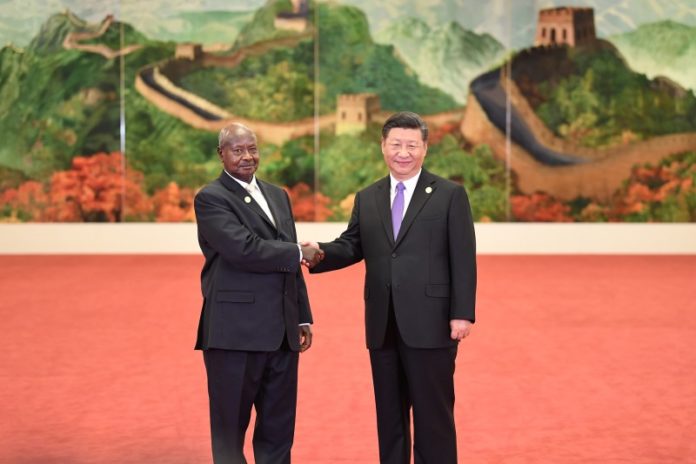
When Chinese president XI Jinping sent senior Chinese diplomat Yang Jiechi to Uganda, on the invitation of the Ugandan government in February 2021, it showed a willingness and cooperation among the two sides to work on mutual benefits and build trust among the two nations to ensure the continuation of this long standing relationship .