“Rob Walker’s is My Best Work Yet” – The Business Of Tourism And Travel Through The Lens Of Photographer Derrick Ssenyonyi

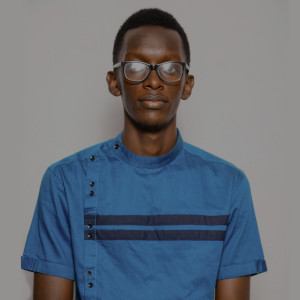
Derrick Ssenyonyi painstakingly makes it clear to me that he’s not ‘your average travel photographer’. He’s very intentional, he knows what he wants, how he wants it and he doesn’t shy away from going after it.
“I do not address myself as just a travel photographer. I address myself as a travel photographer, video creator, online influencer and a business person in general,” he says in our interview early March.
He’s just-then getting back to me on a stormy Saturday evening after my follow-up message inquiring if he had received my email.
“I was still on a trip but I’m traveling back to Kampala tomorrow after which I can respond.”
He’s quite busy, and understandably so – that’s why I picked him to feature as the fifth entry on the HUSTLE CORNER series.
For the past two years, Ssenyonyi has been a top-gun in the country’s tourism content marketing industry, soaring above his peers, his brand growing larger than the man himself, but he’s surprisingly coy about it. He’s just come from possibly one of the biggest jobs of his career, documenting Rob Walker’s trip around the country, but still sounds exceptionally modest.

“It’s always a pleasure to get to travel with VIP guests because it puts you out there and boosts your brand,” he brushes off my compliment.
Perhaps the most striking thing about our interview is the certainty in his voice. He says “photography is a business, not a passion” like someone who fully comprehends what he’s talking about. He also gives very sound advice for budding photographers and professionals in general.
Here are edited excerpts from our conversation.
Briefly tell us about yourself
My name is Derrick Ssenyonyi. I’m a Ugandan born in a family of 5, all of us raised by a single mum. I’m a tourism graduate and a professional photographer for wildlife, nature and travel.
I’m a video creator for YouTube, TikTok and social media and an online influencer. I have been to four countries where I’ve travelled for my work i.e Kenya, Tanzania, Rwanda and South Sudan. I travel the country doing what I love and getting paid for it.

What interests me is mainly meeting new people and interactions in general.
How did you find yourself in the travel and tourism industry?
Being a tourism management graduate, I had no where to be other than in tourism, although I had to find means of being there as something other than a guide, which is what most people studying tourism look to do.
Friends were always saying; “Oh, you’re going to be the best guide in the country. You’re going to be working for guys like Wekesa.”
But when you get out of school, that’s when you realize that you need to specify, to get something you’re good at. For me, that was photography.
Some people go into birding, others butterflies, others trees, others mammals. So for me, it was photography because that was the least tapped into space in our country.

“He’s a great young photographer.” Those are the words Rob Walker used to describe his experience working with you on his recent trip to Uganda. How does such make you feel? And what was your own experience like?
It’s a great thing to get a compliment from someone like that. I never asked that from Rob. It was a very fast trip and was packed because there were a few days. My job was to document those days and produce images that can be used on a national level.

It’s always a pleasure to get to travel with VIP guests because it puts you out there and boosts your brand.
And for me, the experience was awesome, shooting him and documenting his experience in Uganda, because I know those images will be there forever and that I’m the one who took them.
What is your creative process like? What does it take to create an image such as your famous gorilla photo?
For me, it’s been always creating an image that can resonate with my viewers. One that someone can look at and ask; “Ah, how did he take this photo?”.

So there’s no technical aspect, except maybe a bit of experience. I have done this for five years now, which means I have some experience in taking these images.
And gorrilas, no one doesn’t love photographing gorillas. They are so peaceful, it’s like walking in someone’s living room and you shoot while they go on about their usual business. You see the real emotions, the real joy. You see the kids jumping around and their mother petting them.

So for me I want to resonate with the nature and with my viewer. I want to create an image that makes you feel like you should be there.
For example, the Rob Walker aerial photo at Murchison where I used a drone.

Many people don’t know how that was taken because they have been to Murchison Falls and to that same location but they don’t have that same photo or something similar. So it’s a process of communicating and not just pointing a camera.
Challenges in your line of work?
We have a problem with the copyright where people use your images anyhow. And it’s hard to pursue legal means.
The other challenge is about the equipment. Right now if you look around, one of the most-taxed industry is content development. After COVID-19, Government saw interest in things like cameras and the taxes shot up for those particular equipment and products. For product you get here at $500, you can get at $300 in the US.

The insurance policies are also not favourable or well regulated especially for photographers in travel. There’s a very long process on how you can get insurance and it’s not really friendly to creators. So it’s not like any creator can go and say ‘let me insure my gadget.’
Your greatest lesson(s) along your journey?
It’s not about who you know. It’s about who knows you.
For example, right now I’m answering your question not because I know you, but because you know me. So to any photographer, you just have to put your content out there because you don’t know who sees your work everytime you post, talk or write about it. I wish I learnt that when I had just started to push myself the way I push myself right now because I’m one of the most aggressive guys online.

Secondly, never trust Government officials. These guys who say “I work for government, come and work with us.” If you don’t have the well aligned and proper contractual terms, don’t work for them.
They are just after passing the project and when it’s done, your images have already been used and you will hustle to get paid. Don’t trust word of mouth, use emails. Leave WhatsApp and use quotations, invoices etc. Learn professional means.
Invest more into learning business skills and not good photography skills because you already have the idea about the photography. So invest more time in learning how to make money. And this is not something we learn in school. When you start working, you think it’s about passion and whatnot, but it’s about you learning the business skills and how to make money, which is the end goal.
Lastly, always be careful about the people that come into your circle. Especially for the creators because many people want free services, particularly the ladies who are a big temptation to photographers and videographers. You have to be very careful, identify it and tell the client that this is not how you do business.
Your work that you’re most proud of?
I think the work I’m most proud of is that work with Rob Walker. I really love those images, they show the colours, the contrast, the saturation, the smiles, the nature and the diversity of our country.
The other work are the images I took in Rwenzori in 2020. It was a project by UNDP through UTB, so I hiked Rwenzori to basically create marketing images.

We’re sure many young photographers out there would like to know how you do it, how you manage to land clients and opportunities such as these. What would you tell them?
I get clients because I speak and show my work. Almost each and every day that I wake up, my goal is to sell myself and there’s no day that I wake up and it’s not about marketing. To get clients, you sell your business as well as you can. You talk about it. You show it.
Two, I write to clients. Most of the time I don’t wait for clients to reach out to me. I write to them and tell them “Hey, this is Derrick, this is what I do.”

If I send 100 emails a day, trust me, 5 will reply. So pitching to clients is a very good way.
Three, the professionalism I exhibit with my clients keeps me referred.
Four, create companies. Stop using your name informally. Register, get TIN numbers and all that. I have a company called Linck Visuals Media that represents me. I’m just the face/brand of the company but I have young photographers that I work with that sometimes go shoot these other events like weddings.
How much do you charge for your services?
I don’t charge my services basing on the time. So I don’t have a daily or hourly rates. For me, I charge basing on the services I’m going to offer, the purpose of the service, the value to the client so that I’m not undercharged or overcharge the client.
If you need images that are going to be used in magazines, those are high value images compared to those going to be hang in someone’s living room. Images like Rob Walker’s trip, those are going to be used at a national scale and are images of high value. So I look at which value I’m creating for my client.

So what is the client expecting to get from using those images?
Maybe they expect tourists arrivals to rise. So I quote not based on the time I invest in, but on the value of the product or service that I’m going to offer. We have a meeting with the client, and then assess the value the client is getting out and then I charge.
So many people will rush to say I charge 500 dollars a day, which I think isn’t the right way to do it. You undersell yourself by offering images of high value and yet you’re paid pennies.
Passion or necessity? What drives you? And what do you think is a more important conviction when it comes to photography and creative life in general?
I’ve seen many photographers say I’m passionate about this. For me this is not and has never been about passion. For me it’s about business and photography is a business for me.

That does not mean that passion was not there. When I was starting, I used to have passion and would even go shoot trips for free. But now, I go to a trip when I’m paid and I’m paid what I’m worth. I will not go when I’m paid pennies. I’ll choose a particular trip that I’ll join. Even if I do one trip in two months, it’ll be worth it. It’ll give me more time to create my videos, to focus on my family and friends, to focus on my dog, Pearl.
For me it’s about business and I’m aiming at buying time for myself. When I get one job in Jan or Feb, it has to be worth it in that even if I sit home for weeks, it’s already enough.
If we stop looking at photography as a passion but as a business, then we will see things change. Treat it as a business. Treat it as a profession you went to school for.
Photos used in this article belong to Derrick Ssenyonyi who owns the copyrights.