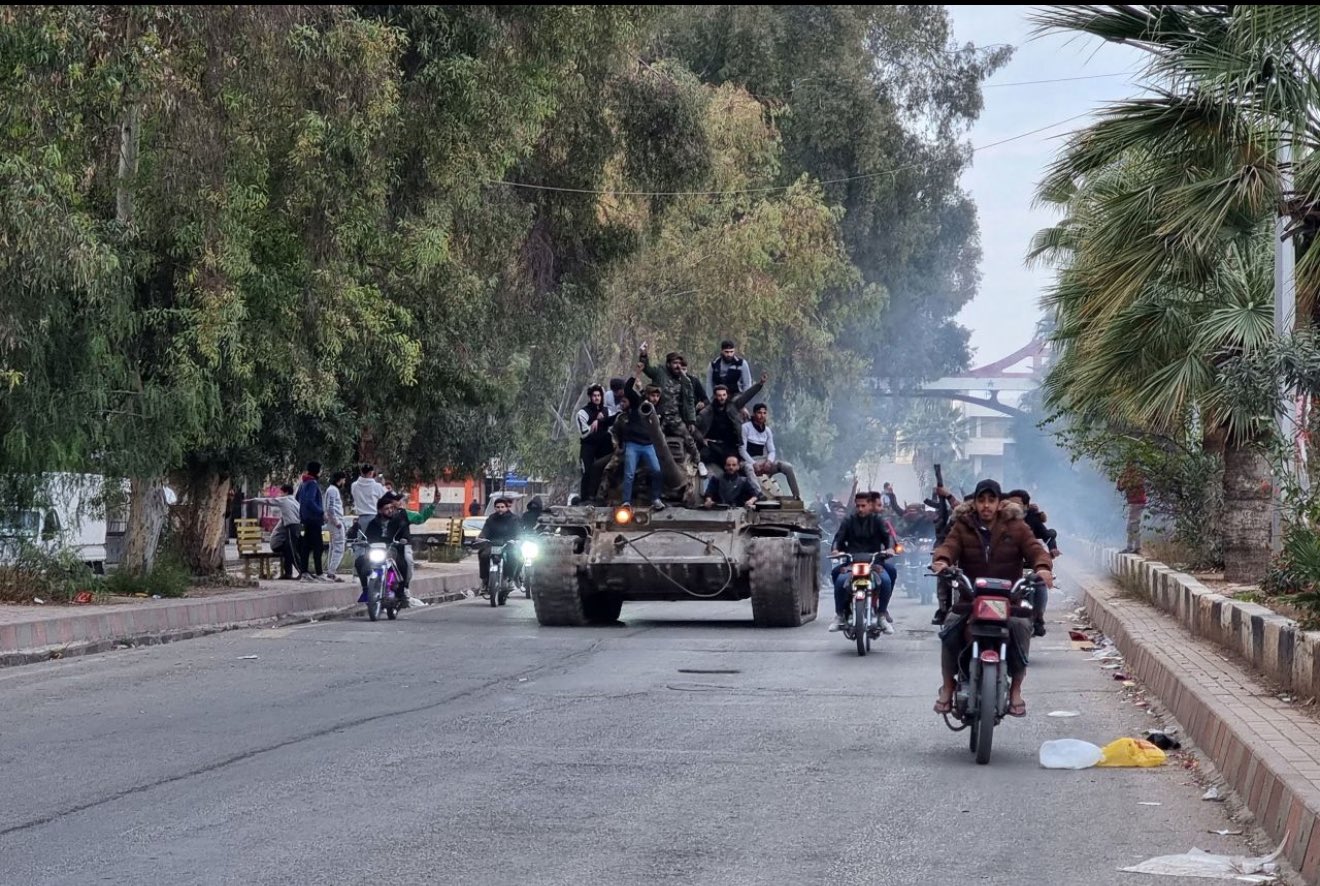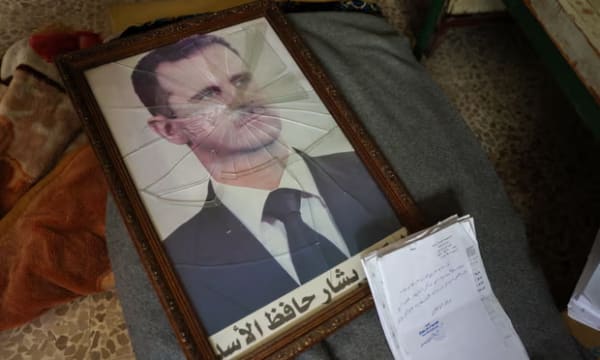
Syrian President Bashar al-Assad is believed to have fled the country his family has ruled over for 50 years as rebels said they had captured the capital after a lightning advance completed in just under two weeks. Two senior Syrian officers told Reuters that Assad fled Damascus, his destination unknown, while the Syrian Observatory for Human Rights war monitor said he had left the country, flying out of Damascus airport before the army security forces left. The reports could not be independently verified. The Syrian leader had been publicly absent as Islamist militant insurgents spearheaded a sweeping offensive that began in a small enclave in northwestern Syria, and within eleven days appeared to have toppled Assad’s rule. Rebels said they had freed prisoners from Damascus’ notorious Sednaya prison, regarded as a symbol of the Assad regime’s brutality, while video from Damascus showed a man climbing on top of a hospital sign to tear down a poster of Assad’s face. In the capital’s central square, people climbed on top of tanks. In Syria’s second city of Aleppo, claimed by insurgent forces just one a week prior, celebratory singing broadcast from the speakers of mosques was interspersed with the sound of ululating and cheering ringing out across the rooftops. The Assad family have ruled Syria since 1971 when Hafez al-Assad seized power in a military coup, before his son Bashar inherited the presidency in 2000. Their control of the country was enforced through a vast security state, crushing dissent through a broad network of detention centres and government surveillance. Bashar al-Assad suppressed a popular uprising against him in 2011, when Syrians first took to the streets of major cities to demand his overthrow. What began as peaceful demonstrations later spilled over into a civil war that is estimated to have killed more than 300,000 people in ten years of fighting. Assad willingly turned the full might of the state on his own people in order to maintain control, including pummelling the civilian population with airstrikes and the use of chemical weapons including the deadly nerve agent sarin. “Today is the end of 54 years of the reign of Assad family in Syria. This is the only regime I knew all of my life,” said doctor Zaher Sahloul, a Syrian-American physician who organised medical missions into Syria, including hospitals in Aleppo that were targeted by Syrian and Russian airstrikes. “I don’t cry often in my adult life but today I did. It has been fourteen long years of horror. This is our Berlin Wall moment,” he said. Intervention from Russia and Iran had allowed Assad to survive almost fourteen years of unrest and civil strife, leaving him in charge of a fractured state. As the insurgency drew closer along the highway that leads to the capital, rebel groups across southern Syria took control of a swath of towns south of Damascus. Armed opposition groups closed in on the capital from three directions as Syrian army officers retreated, or fled. Video from Damascus showed soldiers rapidly changing into civilian clothes on the streets of the capital before dispersing. Prime minister Mohammed Ghazi Jalali said the government was ready to “extend its hand,” to the opposition, offering to work with a transitional government in a video statement.