SPECIAL REPORT: How Ssekandi’s Office, Nankabirwa’s Energy Ministry and UETCL Are Rewriting the Story of Darkness in Rural Masaka

For nearly thirty years, darkness was not merely the absence of light across many villages in rural Masaka District — it became a symbol of delayed opportunity, silent poverty and development left behind.
When the sun disappeared beyond the hills of Kyanamukaka, homes retreated into silence. Small businesses shut their doors early, students revised under smoky paraffin lanterns, and families prepared for another night disconnected from the modern economy shaping much of urban Uganda.
Since 1996, many households across rural Masaka survived without access to reliable electricity despite Uganda’s broader infrastructure growth under the leadership of President Yoweri Kaguta Museveni.
Entire generations grew up watching electricity poles stop at urban centres while villages remained trapped in what residents often described as “development in darkness.”
But today, after decades of waiting, a major rural electrification intervention is beginning to transform that story.
A coordinated mobilisation drive led through the office of former Vice President Edward Kiwanuka Ssekandi, working alongside the Ministry of Energy and Mineral Development under Energy Minister Ruth Nankabirwa and technical teams from Uganda Electricity Transmission Company Limited, is now giving fresh hope to communities that spent years feeling forgotten.
Across Kyanamukaka and surrounding areas, residents say the intervention represents one of the most visible government development efforts witnessed in recent years.
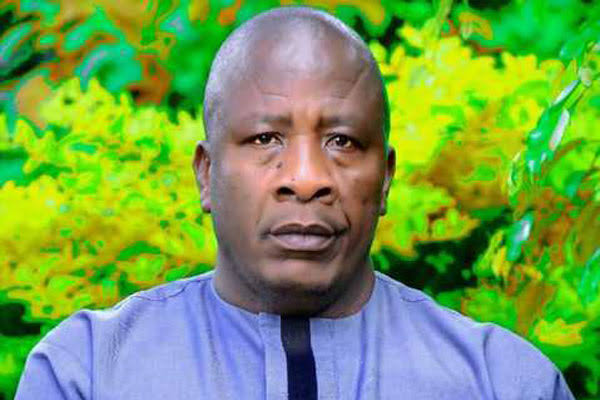
At the centre of the grassroots mobilisation process is Mr. Oscar Mutebi, Personal Assistant to Ssekandi, whose continued engagement with communities has strengthened coordination between residents, local leaders and government agencies overseeing the electrification programme.
Through mobilisation meetings, consultations and field engagements, the Ssekandi office has intensified efforts aimed at ensuring rural communities are included in Uganda’s national industrialisation agenda.
For many villagers, the presence of survey teams and technical engineers moving through previously neglected areas is itself a powerful psychological transformation.
“It feels like government has finally remembered us,” one resident remarked during a recent community engagement meeting in Kyanamukaka Town Council.
During the mobilisation exercise, Mutebi described electricity as the foundation upon which modern development is built.
“A village without electricity is like a body without blood circulation. Everything slows down,” he noted.
His remarks resonated strongly among farmers, traders and youth groups who understand that electricity means far more than lighting homes.
In rural Uganda, households without electricity continue facing enormous daily struggles.
Children revise under dim lanterns that affect eyesight and limit study hours. Mothers spend long hours collecting firewood while families spend scarce income on paraffin, candles and batteries.
Health centres without reliable electricity struggle to preserve medicine and operate emergency equipment. Businesses close early because darkness limits movement, security and economic activity.
In many villages across Masaka, darkness became deeply connected to economic exclusion.
But in areas where electricity has started reaching households and trading centres, the transformation is already becoming visible.
At night, villages that were once swallowed by darkness now glow with security lights and busy roadside businesses. Children can study comfortably under bright bulbs while families charge phones from home and access information through television and radio.
Women, who traditionally shoulder much of the domestic burden in rural households, are increasingly benefiting from improved household convenience and reduced dependence on firewood and paraffin.
For many residents, electricity is restoring dignity to village life.
Business activity is also rapidly changing in electrified areas.
Shops remain open longer, salons are emerging in trading centres, welding workshops are increasing, and grain milling businesses are becoming more efficient. Youth groups are now discussing internet cafés, refrigeration services and entertainment centres — enterprises that previously existed only in towns.
Coffee and dairy farmers believe electricity will unlock long-awaited agricultural value addition opportunities.
Coffee processing machines, irrigation systems and milk cooling facilities are expected to reduce losses while increasing productivity and household incomes.
Local leaders say the intervention could significantly reduce unemployment among rural youth by creating opportunities for small-scale industrialisation and entrepreneurship.
Meanwhile, technical teams from UETCL have intensified feasibility assessments and route mapping exercises across targeted villages in Masaka District.
Government officials say the electrification programme forms part of Uganda’s broader rural transformation strategy aimed at ensuring no region is left behind in national development.
Minister Nankabirwa recently emphasised that electricity strengthens peace, productivity and social stability within communities while opening doors for investment and modernisation.
Her remarks have reinforced growing optimism among residents who now view electricity not merely as infrastructure, but as a bridge toward economic inclusion.
In a message delivered through his office, Ssekandi has consistently emphasised the need for development that citizens can physically experience in their homes and communities.
For many residents across rural Masaka, that message is beginning to take visible shape.
Today, where darkness once symbolised neglect, electricity poles are increasingly becoming symbols of hope, opportunity and transformation.
For households that have waited since 1996, the growing collaboration between the Ssekandi office, the Energy Ministry and UETCL is more than a government project.
It is the arrival of possibility after decades of waiting.
And across the hills and trading centres of rural Masaka, many now believe that after a long season of darkness, the light of transformation is finally reaching their homes.