“Pipeline business is good and durable business” – Museveni Dismisses Critics and Conservationists

President Museveni has dismissed criticisms by the oil pipeline critics and several local and global environmentalists, saying that the oil pipeline business is good and durable if handled in the proper way.
“Oil has been important and will continue to be important. Oil transformed the very poor countries of North Africa and Middle East to very affluent societies on account of the petrol dollars that started flowing in that area following Gadaffi’s activism for higher oil prices and the Arab-Israeli war of 1973. Therefore, Tanzanians, Ugandans and all the global citizens, the East African Pipeline business is good and durable business. It will create jobs during construction and after. Other service providers will also be able to supply those who work in the oil sector e.g. hotels, transport, food-suppliers etc,” Museveni said.
Environmentalists argue that East Africa – and Africa as a whole – does not need oil to reach the heights of her potential.
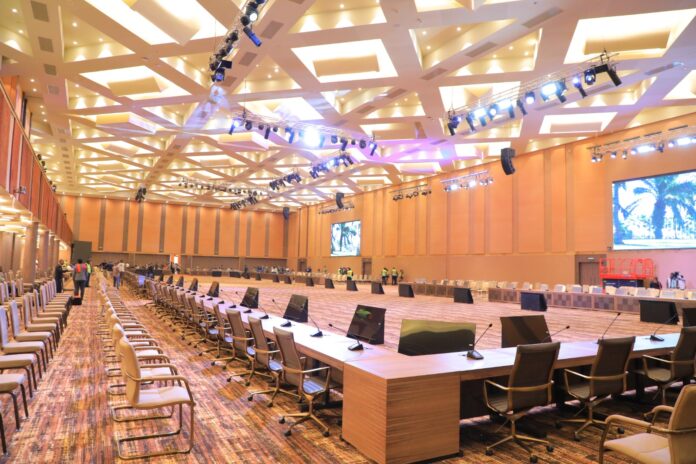
Museveni was in Tanzania over the weekend attending an oil and gas meeting, and later held bilateral talks with his Tanzanian counterpart Samia Suluhu Hassan.
While in Tanzania, Museveni attended a private-sector-organized symposium that discussed opportunities presented by the 1,445km East African Crude Oil Pipeline (EACOP) project.
The EACOP is a Crude Oil Export Pipeline from the Albertine Graben in Uganda to the East African Coast. The pipeline, which takes the Hoima (Uganda) – Tanga (Tanzania) route was selected as more secure, at a cheaper cost and therefore, a lower tariff.
It is a 1,443km, 24-inch diameter heated and buried crude oil pipeline that will start from Kabaale, Hoima in Uganda to Chongoleani, Tanga in Tanzania. The pipeline will have a manifold in Kabaale, Hoima, six (06) pumping stations (two (02) of which will be located in Uganda), 27 heating stations and two (02) pressure reduction stations.
While speaking at the event, Museveni acknowledged that some uses of oil contribute to climate change through global warming and pollution, but also added that “that however, is not the fault of oil, but the fault of the misusers. Uganda therefore supports the movement towards cleaner energy sources like hydro, solar, win, geothermal and even nuclear and we are preparing for that”.
The development of the EACOP is being led by the licensed upstream oil companies in Uganda, with participating interests by the Governments of Uganda and Tanzania.
The two countries in April this year signed the Host Government Agreement, Share Holder Agreement (for the pipeline company) and Tariff agreements, three key agreements to kick off the construction of the East African Crude Oil Pipeline (EACOP) with France’s total and China’s CNOOC.
While in Tanzania, Museveni also announced that the oil pipelines that shall be used will be imported from elsewhere rather than manufacture them locally as earlier proposed due to time constraints. Museveni said that although importation is more costly, it will take a shorter time and the project shall be kickstarted sooner.
“We decided to leave that to companies to import pipes out of the continent. Billions will be lost, but the project will take off. For example, US$52 million will be spent on transport costs annually and US$272 million annually,” said Museveni.
The first oil drop from the Albertine Graben belt is expected to start flowing in 2025 following the launch of project works of the $3.5 EACOP project in April.