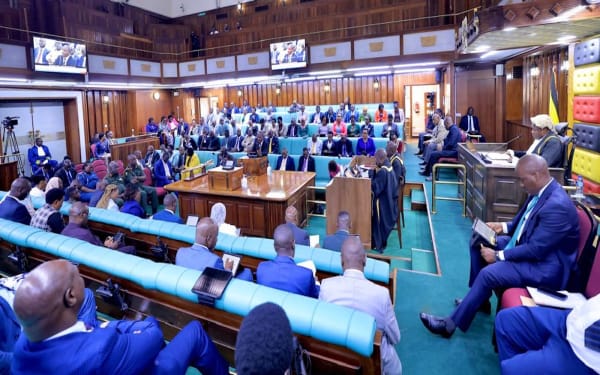
Otafiire Defends Refugee Work Rights As MPs Question Foreign Businesses In Kampala
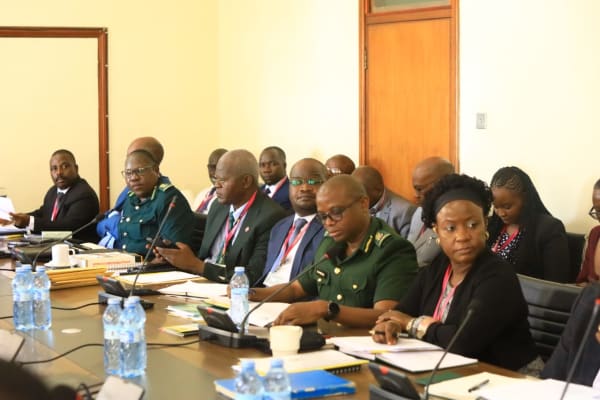
Internal Affairs Ministry official in Parliament yesterday
The Minister of Internal Affairs, Maj Gen Kahinda Otafiire, has defended Uganda’s refugee policy after Members of Parliament raised concerns about the growing number of foreign nationals operating businesses in Kampala suburbs.
Appearing before the Parliamentary Committee on Defence and Internal Affairs on March 26, 2026, Otafiire said many of the foreigners in question are refugees who fled conflict in their home countries and are allowed to work to support themselves.
“The government policy is that if a refugee can support himself or herself that eases the burden on the government,” Otafiire said.
He stressed that allowing refugees to engage in economic activities reduces dependence on state support and helps them integrate into communities.
During the meeting, legislators questioned whether the level of participation by foreigners in small-scale businesses was fair to Ugandans.
MP Brandon Kinti asked whether refugees and other foreign nationals should be allowed to run businesses such as salons and pedicure shops.
“If you say these foreigners are here legally and they have been duly registered, are they also allowed to operate salons, run pedicure shops and all these economic activities that are meant for Ugandans?” he asked.
MPs pointed to areas such as Makindye, Ggaba, Kabalagala, Kansanga and Lukuli, where they said foreigners appear to be dominating parts of the informal sector.
Kampala has in recent years seen an increase in Somali and Eritrean communities, especially in urban suburbs. Many have established businesses including restaurants, beauty salons, retail shops and money transfer services.
Uganda remains one of Africa’s largest refugee-hosting countries, with an open-door policy that allows refugees to live and work freely. Officials have often said this approach promotes self-reliance and reduces pressure on public resources.
However, the visible growth of foreign-run businesses has sparked debate among sections of the public, with some arguing that locals are being edged out of certain trades.
Authorities have in the past raised concerns about illegal activities involving some foreign nationals, including undocumented migration and organised prostitution networks in parts of the city.
Even so, government officials maintain that most refugees are law-abiding and contribute positively to the economy.