Museveni Weighs in on Middle East Crisis, Urges Dialogue, Two-State Solution
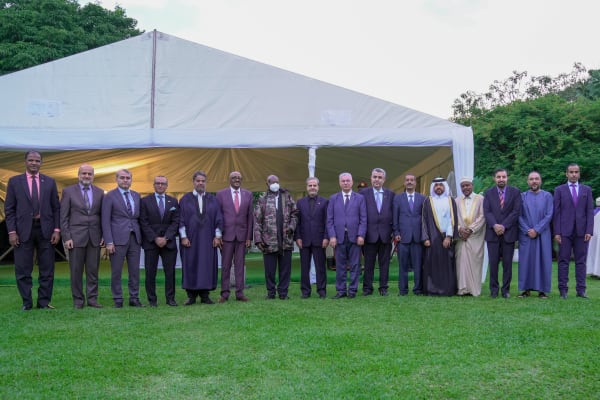
Museveni made the remarks on Thursday night while hosting Ugandan Muslims for an Iftar dinner at State House in Entebbe.
President Yoweri Museveni has weighed in on the escalating tensions in the Middle East, urging restraint, dialogue and renewed commitment to a two-state solution as fighting involving Iran, Israel and the United States raises fears of a wider regional war.
Museveni made the remarks on Thursday night while hosting Ugandan Muslims for an Iftar dinner at State House in Entebbe. Uganda currently chairs the Non-Aligned Movement, a bloc of more than 100 developing countries that traditionally advocates for neutrality and diplomatic solutions to global conflicts.
The dinner was attended by Iran’s ambassador to Uganda, Majid Saffar, who earlier in the day had called on Uganda, in its capacity as chair of NAM, to publicly address what he described as aggression against Iran by Israel and the United States.
Museveni said the unfolding crisis reflects deeper political divisions in the region, rooted in what he described as “chauvinism,” where different actors view themselves as superior to others.
“The whole problem starts with what we call chauvinism when everybody thinks they are the most important,” Museveni said, warning that such attitudes were fuelling destruction across the Middle East.
The Ugandan leader revealed that over the years he has discussed the region’s tensions with several leaders, including Israeli Prime Minister Benjamin Netanyahu and former Iranian presidents Mahmoud Ahmadinejad, Ebrahim Raisi and Akbar Hashemi Rafsanjani.
He said he had urged Iranian leaders to recognise Israel as part of efforts to unlock the long-stalled two-state solution to the Israeli-Palestinian conflict, arguing that Jews, Persians, Medians and Palestinians all historically belong to the Middle East.
At the same time, Museveni said he had challenged Netanyahu on Israel’s reluctance to fully embrace the two-state framework and questioned Washington’s reliance on military force in the region.
“Why the use of force in this area?” he said, referring to the United States’ role in the crisis.
Museveni argued that lasting peace in the Middle East would require leaders to move away from identity-based politics and focus instead on shared interests and economic cooperation.
He said global prosperity would benefit all countries, citing the economic rise of China as an example of how development in one part of the world can expand opportunities elsewhere.
Using the spirit of Ramadan, Museveni called on world leaders to pursue justice, peace and economic growth rather than conflict.
“Let us work for justice everywhere and global affluence,” he said, arguing that prosperity and stability are mutually reinforcing and essential for lasting peace.