Museveni Urges NAM to Learn from Uganda's Bad History
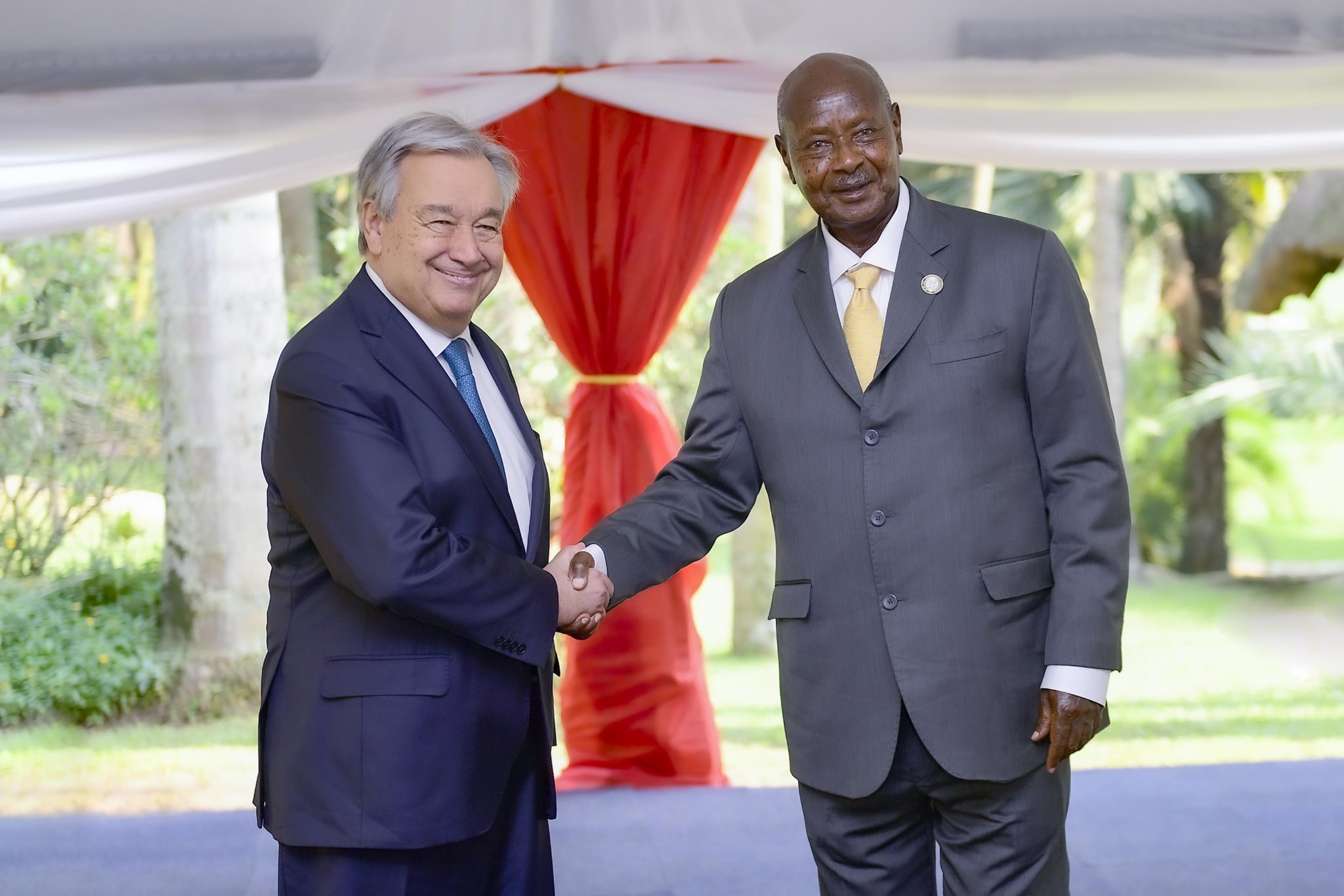
President Museveni and UN SG Antonio Guteress at the closing of the NAM Summit
President Yoweri Museveni has urged the 120 member nations of the Non-Aligned Movement (NAM) to foster increased intra-state trade and discard protectionist trade policies.
Addressing the NAM Heads of States and Government Summit's closure at Speke Resort Munyonyo, Museveni advised member states to steer clear of historical errors, citing Uganda's regrettable expulsion of Asians, particularly from India and Pakistan, under President Idi Amin's leadership 50 years ago. Museveni emphasized the detrimental impact of such decisions on the nation's economy.
Recalling the prosperous 1960s and the subsequent disruption caused by Amin's actions, Museveni stressed the importance of studying the investment climate in member countries. He highlighted the significant contributions of expelled Asians, who were actively involved in sectors such as sugar, hotels, and steel production.
The president commended the revitalization efforts of individuals like Sudhir Ruparelia, one of the expelled Asians who returned to Uganda during the NRM government's tenure. Museveni revealed that those who returned had since established over 900 factories in the country.
Emphasizing collaboration in trade, Museveni provided examples such as Malaysia's successful investment in Uganda's palm production. In contrast, he noted Japan's reluctance to invest in Uganda, despite the East African nation's substantial support for the Japanese motor vehicle industry since the 1970s.
Museveni disclosed his efforts to persuade Japan to establish an assembly plant in Uganda, which they consistently declined. Consequently, Uganda initiated a state-supported car manufacturing plant. The summit's closing ceremony also featured United Nations Secretary-General Antonio Guterres, advocating for a more equitable global financing system for developing economies.