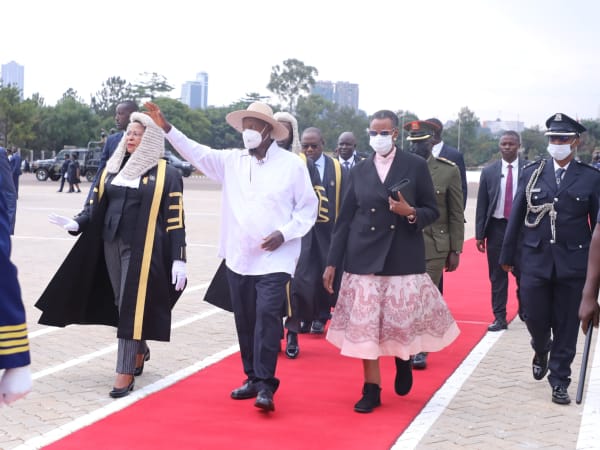
In his final State of the Nation Address for the 2021-2026 term, President Yoweri Museveni delivered a strong message of optimism for Uganda's economic future. Speaking at the Kololo Independence Grounds on Thursday, June 5, Museveni outlined the country’s economic progress, with particular emphasis on growth, infrastructure development, and long-term sustainability.
Despite global challenges and the suspension of foreign aid from key international partners, the President was resolute in his confidence that Uganda’s economy remains on a positive trajectory.
“Uganda’s priorities are clear, and we cannot deviate from them. We will continue to defend and transform this country, regardless of external pressures,” Museveni asserted. He pointed to major infrastructure projects such as the construction of the East African Crude Oil Pipeline (EACOP), the Standard Gauge Railway (SGR), and the oil refinery in Hoima, all of which remain on track despite the challenges posed by external actors.
Economic Growth and Projections
President Museveni highlighted the country’s strong economic growth, noting that Uganda had been ranked as the 7th fastest-growing economy globally by the International Monetary Fund (IMF). He revealed that the size of Uganda’s economy is projected to reach Shs 224 trillion (around $60 billion) by the end of June 2025, with continued growth expected.
"In the last quarter of the financial year, we saw a growth of 6.7%, which is higher than last year’s 5.6%. For the next financial year, we are forecasting a growth rate of 7% with the start of commercial oil production,” Museveni stated.
The President also shared projections that Uganda’s GDP would more than double to USD 158 billion by 2030. These figures underscore the long-term vision of the government to build a resilient and prosperous economy for future generations.
Overcoming Aid Cuts and Building Local Resilience
Despite significant cuts in foreign aid from major donors like the United States and the World Bank, President Museveni remained upbeat about Uganda’s economic future. These aid reductions, largely a result of Uganda’s controversial Anti-Homosexuality Act, have not impeded the country's progress.
“We are resilient, and we have continued to grow, even with these external challenges,” Museveni remarked. He also pointed out that Uganda’s currency, the shilling, is now the most stable in Africa, having appreciated by 6.1% in the past year. With inflation remaining under control, Uganda is on track for a sustainable and prosperous future.
Focus on Local Development and Economic Empowerment
President Museveni attributed much of Uganda’s growth to strategic government investments over the past decade. These initiatives include the capitalisation of the Uganda Development Bank (UDB) and wealth creation programmes such as the Presidential Initiative on Wealth and Job Creation (PDM) and the Youth Livelihood Programme (YLP). These projects have injected substantial funds into the economy, supporting local businesses and entrepreneurs.
“The investments we’ve made are deliberate and focused, aimed at ensuring Uganda’s growth is sustained and inclusive,” Museveni explained. He called for continued efforts to empower Ugandans through education, infrastructure, and support for small and medium-sized enterprises (SMEs), which are the backbone of the country’s economy.
Museveni concluded his address by reaffirming his government’s commitment to building a prosperous Uganda, one that can stand strong despite the challenges it faces from both within and outside its borders. “We will continue to build this nation, and together, we will move forward with purpose and determination,” he said.