Museveni Denounces 'Nomadic' Opposition Crowds in New Year Address
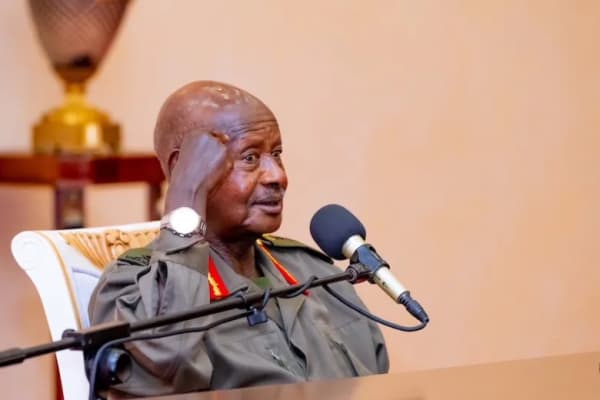
President Yoweri Museveni
In his traditional End of Year national address, President Yoweri Museveni has delivered a scathing critique of the political opposition, accusing them of "anarchic conduct" and orchestrating deceptive displays of public support.
Speaking from his country residence, the President focused heavily on issues of law and order, framing recent political movements as products of "wrong politics" fueled by external interests.
A central theme of the President’s speech was the alleged manipulation of rally attendance. Mr Museveni claimed that the opposition, specifically targeting the movement led by Mr Robert Kyagulanyi (Bobi Wine), has been "transporting audiences" to create a false image of immense popularity.
He cited recent events in Mbarara, claiming that individuals arrested following the opposition leader confessed to using a fleet of approximately 200 vehicles to ferry what he termed "nomadic audiences" across the country.
According to the President, these tactics are designed to mislead the public and international observers regarding the true scale of opposition support.
Beyond the logistics of rallies, the President alleged that these political manoeuvres are prompted by "parasitic foreigners" intent on destabilising Uganda.
He warned that the schemes of the opposition were aimed at causing chaos on behalf of these unnamed foreign funders. This rhetoric of sovereignty and anti-interventionism has long been a staple of the President’s addresses, but it took on renewed vigour as he described the opposition’s conduct as inherently "indiscipline."
The President’s stern warning against ferrying supporters has, however, invited scrutiny from civil society and political analysts.
Ironically, his own party, the National Resistance Movement (NRM), has frequently faced similar accusations.
Throughout campaigns in Northern and Eastern Uganda, the NRM has been accused of using government resources and school buses to transport crowds—including young schoolchildren—to fill seats at presidential rallies.