Minister Launches Mini Dairy Processing Plant to Boost Value Addition in Kiboga
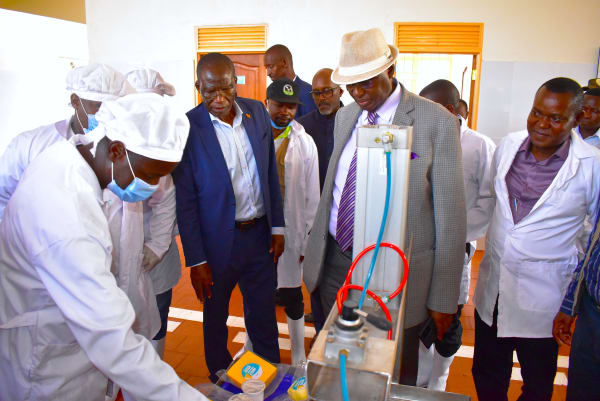
Minister Rwamirama is shown some of the milk products being processed by the Cooperative
The Minister of State for Animal Industry, Hon. Bright Rwamirama, has inaugurated a new mini dairy processing plant in Kiboga District, marking a significant step forward in Uganda’s agricultural sector. The plant, operated by Dwaniro Dairy and Livestock Cooperative Society, will produce yogurt and cheese, adding value to local dairy production and supporting farmers in the region.
The launch event, held at Dwaniro Dairy premises in Bukomero sub-county, Kiboga, saw the attendance of cooperative members, local leaders, and other agricultural stakeholders. Dwaniro Dairy Cooperative was chosen as one of eight cooperatives across Uganda to receive government support due to its exemplary practices.
Government’s Commitment to Value Addition
Minister Rwamirama praised Dwaniro Cooperative's efforts and urged the members to ensure sustainable operations for the new plant. “We give this support to deserving cooperatives,” he said. “What remains now is for you to sustainably run this factory and expand. Government has given you a starting point.”
He emphasised the importance of productivity over herd size, encouraging the cooperative to focus on high-yield cattle breeds that can withstand Uganda’s climatic conditions. “Modern farming is not about how many cattle you have but how productive they are,” the Minister added.
Economic Boost for Local Farmers
The processing plant will have a capacity to process 4,000 litres of milk daily, a development that Dwaniro Cooperative Board Chairman, Mr. Kwesigabo Johnson, described as transformative for the cooperative. “This is a milestone for us as farmers. It symbolises that we can add value and have a product that is market-ready,” said Mr. Kwesigabo.

He highlighted the role of Uganda Development Bank (UDB) in supporting the cooperative’s growth. UDB has been a key financier, providing credit facilities that the cooperative pools to support its members. “We borrow as a cooperative, allowing us to lend small amounts to farmers, who have used these loans to purchase quality livestock, build valley dams, and improve pastures,” Mr. Kwesigabo explained.
Since its establishment in 2009, Dwaniro Dairy and Livestock Cooperative has grown from 15 members collecting 2,000 litres of milk daily to a current capacity of 35,000 litres, serving over 800 farmers in Bukomero. The cooperative’s milk is largely purchased by Jesa, a leading dairy processor in Uganda, ensuring a steady market for local dairy farmers.
UDB’s Role in Agro-Industrialisation
Uganda Development Bank plays a crucial role in supporting Uganda’s agricultural sector, particularly in agro-industrialisation. In 2023, UDB allocated 30.6% (UGX 187 billion) of its funds to agricultural projects, creating approximately 51,841 jobs across primary agriculture, agro-processing, and manufacturing sectors.
Beyond financial support, UDB also offers business advisory services to cooperatives, helping them build a sustainable foundation for growth. The bank’s continued support has been pivotal to Dwaniro’s success, according to Mr. Kwesigabo, who noted that UDB’s confidence in the cooperative has encouraged them to pursue further expansion.
Future Plans and Quality Standards
Looking to the future, Minister Rwamirama urged Dwaniro Cooperative to uphold high milk handling standards to meet international market requirements, noting that the global market demands stringent quality standards. He also encouraged the cooperative to nominate representatives for training in artificial insemination, a government initiative aimed at enhancing livestock productivity. The Ministry of Agriculture will provide equipment to the trained representatives, further supporting productivity gains.
“Uganda’s average milk consumption is just 64 litres per person per year, far below the World Health Organization’s recommended 200 litres. Since we don’t consume all the milk we produce, finding export markets will be essential, and that requires maintaining high quality standards,” Minister Rwamirama explained.
The event was also attended by Dr. Samuel Mugasi, Executive Director of the National Agricultural Advisory Services (NAADS); Samson Mpiira, Executive Director of the Dairy Development Authority (DDA); and Kiboga’s Resident District Commissioner, Hajj Ddumba Moses, among other dignitaries. The inauguration of the processing plant marks an essential step in Uganda’s journey towards value addition in agriculture, empowering local farmers and strengthening the dairy industry.