Martyrs Day: Museveni Stresses Christianity's Role in National Unity and Development
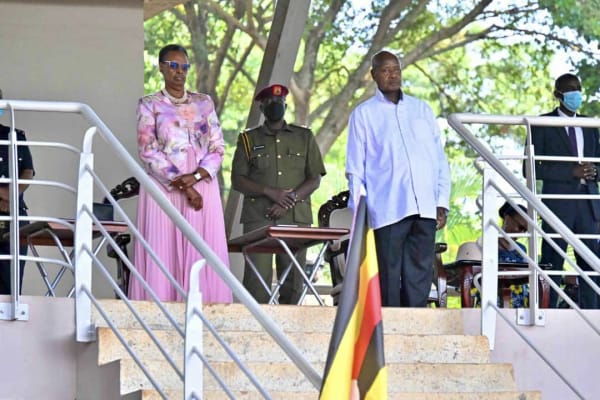
President Yoweri Museveni and Janet at Namugongo
On June 3, 2024, during the Uganda Martyrs Day celebrations at Namugongo Shrine, President Yoweri Kaguta Museveni addressed the nation, emphasizing the enduring influence of Christianity in shaping the nation's moral and socio-economic landscape.
The event was marked by a gathering of pilgrims from across Uganda and other countries, all convening to honor the legacy of the Uganda Martyrs who were executed by Kabaka Mwanga for refusing to renounce their faith
In his speech, President Museveni drew parallels between the historical persecution faced by the early Christian martyrs and those in Uganda, noting that the martyrdom of the Uganda Martyrs was a catalyst for the spread of Christianity across Africa. "The blood of the Martyrs watered the seed of Christianity. It was, therefore, not shed in vain," Museveni stated, reflecting on how their sacrifice significantly contributed to the growth of Christianity in the region.
Highlighting the broader historical context, President Museveni recounted the tribulations faced by early Christians during the Roman Empire, including the martyrdom of St. Stephen and James, brother of John. These historical anecdotes served to underscore his point about the resilience of faith-driven movements against oppression.
Museveni criticized Kabaka Mwanga’s attempts to suppress Christianity, describing them as futile efforts against divinely inspired teachings that promote righteousness and societal unity. He said, "The story of the Uganda Martyrs is proof that it is impossible to suppress correct ideas, especially if they are anchored on godliness and humanity." Museveni encouraged reflection on these historical injustices, urging forgiveness and understanding in the spirit of Christian teachings.
Expanding on the theme of Christianity's role in modern Uganda, President Museveni connected religious virtues to the nation's socio-economic agenda. He emphasized how Christian values such as honesty, integrity, and love for one's neighbor are integral to fostering a society that resists corruption and other societal ills. "The fear of God teaches believers to guard themselves from engaging in evil practices," he explained, reinforcing the idea that spiritual health directly influences societal well-being.
The President also used this occasion to advocate for a balanced approach to spiritual and earthly responsibilities among Christians. He stressed the importance of not only striving for spiritual enlightenment but also addressing physical needs such as food, shelter, and healthcare. Museveni outlined his vision for economic progress through engagement in sectors like agriculture, industry, services, and ICT, urging the faithful to participate actively in nation-building efforts.
Drawing inspiration from the life of Jesus Christ, who ministered to both the spiritual and physical ailments of His followers, Museveni called on religious leaders to guide their congregations in similar endeavors. "A relevant Christian Ministry is one that encourages believers to work towards achieving decent standards of living," he stated, pushing for a doctrine that equally prioritizes spiritual growth and socio-economic development.
In conclusion, President Museveni's speech at the Uganda Martyrs Day celebrations was a profound reminder of the significant role that religion plays in shaping national identity and guiding moral and economic progress. His message underscored the powerful interplay between Uganda’s historical narratives, Christian values, and modern statecraft, advocating for a holistic approach to faith that actively contributes to the betterment of society.