Low Insurance fuels insecurity - Gen Muhoozi
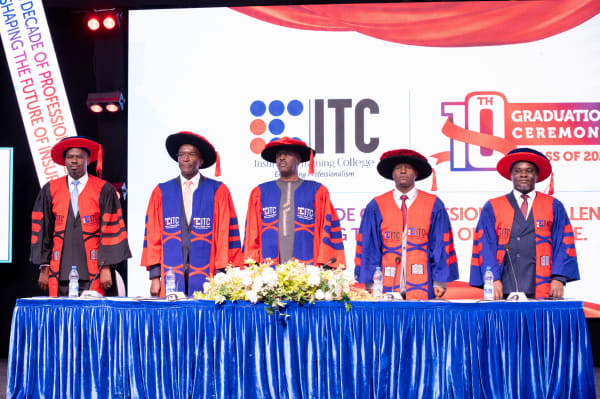
General David Muhoozi, the State Minister for Internal Affairs at the graduation
The absence of widespread insurance coverage is a direct path to national instability and disorder, according to General David Muhoozi, the State Minister for Internal Affairs.
Gen Muhoozi delivered this stark assessment today, Wednesday, December 13th, as he presided over the Insurance Training College (ITC)’s 10th graduation ceremony at Hotel Africana in Kampala.
A total of 1,167 students were awarded certificates and diplomas, including the college’s first cohort of seven graduates from the Advanced Diploma in Insurance. He emphasized that when disaster strikes, it is the lack of a financial safety net that pushes vulnerable populations toward chaos.
Insurance as a Critical National Vulnerability
As the chief guest, Gen Muhoozi laid out his core thesis: that inadequate insurance coverage is a critical vulnerability that the nation must address to maintain peace.
He defined insurance as being "at the core of human security," arguing that people's protection extends far beyond the physical defence of borders.
He explained that true national stability requires comprehensive security—encompassing shelter, health, food, and social safety nets—not merely the absence of conflict. For the Minister, a lack of financial resilience is a precursor to social disorder, making the graduates' role essential in promoting the "law, order and peace of mind that the government is sworn to uphold."
Economic Stability Through Timely Claims
The Minister highlighted the sector’s crucial role as an economic stabiliser. He shared data from the Insurance Regulatory Authority (IRA) annual report of 2024, noting that the Ugandan insurance sector had paid out over Shs 887.4 billion in claims in the past year.
“This wasn't just money; it was businesses saved, homes rebuilt and livelihoods restored; a direct injection of stability into our economy,” he asserted. Gen Muhoozi stated that the training celebrated at the ITC is therefore of strategic national interest, providing graduates with a “profound duty of care.”
Gen Muhoozi focused a significant part of his address on a critical national vulnerability: the massive protection gap in agriculture. With 70 per cent of the population dependent on farming and frequent climate shocks occurring, he noted that less than one per cent of farmers possess agricultural insurance.
He called this a "national vulnerability that we need to plug quickly." He explicitly argued that closing this protection deficit is a national security measure, turning insurance into a proactive shield that prevents the socioeconomic descent that often breeds crime and places an undue burden on the justice and internal affairs system.
Training the "footsoldiers of this trade," he concluded, is thus an essential enabler for desired safety and security.
Saul Sseremba, the Principal and Chief Executive Officer of the ITC, celebrated the occasion as a "historic day" marking a decade of excellence.
He proudly announced that the college has entered the annals of history by becoming the first institution in the region to graduate students at the Advanced Diploma level.
Sseremba also noted the institution’s expanding regional influence, pointing out the graduation of the first cohort of students from Rwanda and the delivery of its diploma programme in Mauritius.
Dr. Ibrahim Lubega Kaddunabbi, CEO of the IRA, added his congratulations, observing that the class comprised twice as many females as males, a powerful sign that the “future is female in Uganda’s insurance industry.”
Both Dr. Kaddunabbi and Dr. Abdul Hafiz Walusimbi, the Chairman of the ITC Board, urged the new graduates to adhere to the highest standards of professionalism.
Dr. Kaddunabbi reminded them that “Insurance is a business of trust. A miss-sold policy, a poorly handled claim or misinformation can undo years of progress. Let your ethics be stronger than any temptation.”
Dr. Walusimbi added that technical expertise is only part of the equation, stressing the need to master soft skills, including emotional intelligence, adaptability, and leadership, to truly excel in the professional arena.