Gulf Wars and Aid Restructuring Dominate Agenda for Kampala Geopolitics Conference 2026
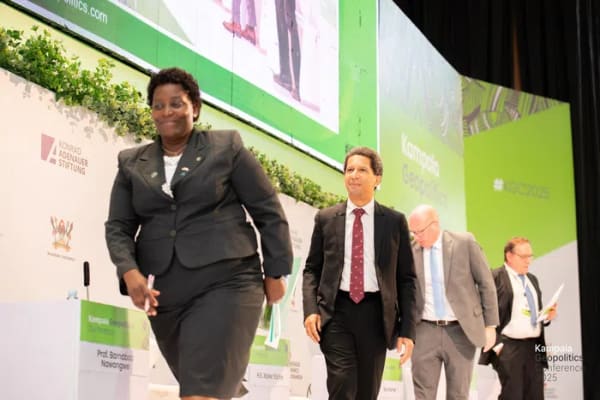
The previous Kampala Geopolitics Conference
The annual conference will take place from April 15 to April 16, 2026 at the Main Hall of Makerere University in Kampala. Organisers say experienced panelists will dissect emerging geopolitical trends affecting Africa, although the names of speakers for this year’s edition will be communicated soon. Among the key topics is Africa’s growing engagement with external powers such as the United States, China, Russia and Gulf states including the United Arab Emirates, Saudi Arabia and Qatar. Discussions will examine how these actors shape investment, security partnerships, trade and infrastructure financing across the continent. The panel will also explore concerns around debt sustainability, control of critical minerals and Africa’s ability to negotiate favourable terms. Another major discussion will focus on Ethiopia’s push for sea access and its impact on the balance of power in the Horn of Africa. The session will analyse tensions surrounding ports, transport corridors and sovereignty, and whether the region is moving towards cooperation or fragmentation. Aid restructuring will also feature prominently, with discussions expected to examine the future of development assistance following funding cuts and the restructuring of global aid programmes. Participants will debate new partnership-based models that combine public and private financing while protecting national sovereignty. Youth participation in policymaking is another topic, with attention on how Africa’s young population can influence governance and public policy decisions beyond symbolic representation. The conference will also tackle reforms to the global financial system. A dedicated session will examine Bretton Woods institutions and whether the IMF and World Bank still serve African growth in a fractured world. Discussions will address borrowing costs, debt burdens and Africa’s limited influence in global financial decision-making. Another headline topic will examine the Democratic Republic of Congo’s peace process, focusing on whether minerals-for-security deals negotiated under pressure can deliver lasting peace. The session will explore the Doha Framework, the Washington Accord and their implications for sovereignty and regional stability. The conference is organised with support from Konrad Adenauer Stiftung, the Embassy of France in Uganda, Makerere University and Alliance Française Kampala.The Kampala Geopolitics Conference will next week for its ninth edition, bringing together policymakers, scholars and analysts to debate wide ranging major global and regional issues.