Government Deploys More Trucks, New Collection Plan For National Cleaning Day
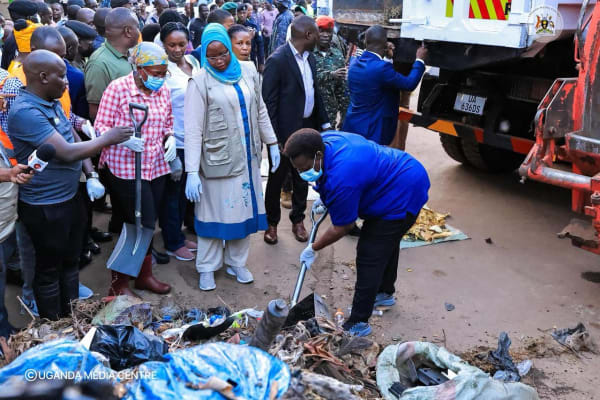
The changes follow problems experienced after the first National Cleaning Day on July 25
The government has announced a new waste collection plan and mobilised more trucks ahead of the second National Cleaning Day as it seeks to avoid a repeat of the garbage backlog that followed the first exercise.
Prime Minister Robinah Nabbanja said authorities have brought in the Ministry of Works and Transport, Wakiso District, municipal councils, district local governments and road contractors to strengthen garbage collection on August 29, 2026.
The changes follow problems experienced after the first National Cleaning Day on July 25, when authorities were overwhelmed by the amount of rubbish collected, especially in Kampala.
Some garbage remained on roadsides for days and, in some places, weeks before it was removed.
Nabbanja said the government had expected to collect about 2,500 tonnes of waste during the first exercise but Kampala alone generated about 40,000 tonnes.
“During the first cleaning, we had estimated to collect about 2,500 tonnes. But we ended up collecting 40,000 tonnes in Kampala alone. We only had trucks for 2,500 tonnes,” she said while speaking to Bukedde TV on Monday night.
She said the government has now secured more trucks for the second exercise.
District local governments will provide tipper trucks, while road contractors have also been asked to release some of their vehicles for the clean-up.
The Ministry of Works and Transport, Wakiso District and other municipal councils will also provide trucks.
“We have enough trucks this time,” Nabbanja said.
The government is also changing how garbage will be collected.
Instead of allowing residents to pile rubbish along roads, local councils must identify designated collection points where trucks can access the waste.
“This time, no one is allowed to pile garbage on the streets. The LCs will have to find a location where the garbage will be placed where our trucks will find it; not on the road,” Nabbanja said.
Where possible, trucks will be stationed at selected points so residents can take waste directly to them.
“Where there isn’t a truck, the leaders should find an obscure place, rather than dumping it on the roadside,” she said.
Nabbanja said authorities also faced challenges at the Buyala waste management facility during the first exercise.
She said the large amount of mixed waste made it difficult to compress and process.
“Even at the garbage collection centre in Buyala, we met challenges because we needed to compress the garbage and yet Ugandan garbage is not separated, which made it hard,” she said.
The Prime Minister said the new arrangements are intended to prevent waste from remaining on roads after the cleaning exercise.
“The last time it was a big mess,” she said.
The second National Cleaning Day will take place on August 29, with movement restricted countrywide between 7am and 10am, except for exempted categories and emergency situations.