Government Calls for Respect of Uganda Flag
Government is sent out a directive aimed at tightening the rules surrounding the display of the national fla
A fresh wave of controversy has hit the Ugandan political landscape following a government directive aimed at tightening the rules surrounding the display of the national flag.
The announcement, made by Hellen Seku, the Commissioner of the National Secretariat for the Patriotism Corps, has ignited a fierce debate over whether the move is a genuine effort to uphold national dignity or a strategic attempt to curb opposition symbolism during an active election cycle.
The issue came to the fore at the Kololo Independence Grounds during a direct consultative meeting between President Museveni and Kampala’s informal sector operators. Commissioner Seku expressed profound concern over what she described as the "unworthy" display of the national colours.
She pointed out that the flag is frequently seen on bodabodas, market stalls, and even within domestic kitchens—placements she deems disrespectful. Under her interpretation of the law, the flag is a sacred emblem that must not be left to the elements or hoisted on private premises without formal authorisation from the Uganda Police or relevant state authorities.
Central to this crackdown is the National Flag and Armorial Ensigns Act, a piece of legislation dating back to Uganda’s independence in 1962. Now found under Chapter 254 of the Laws of Uganda, the Act serves to protect the nation's identity by defining the official design of the flag and the Coat of Arms.
Legally, the state has the power to prosecute anyone who brings these symbols into "contempt" or ridicule. Furthermore, the Act grants the Minister significant discretion to regulate when and how the flag is flown, specifically prohibiting its use for commercial ventures or unauthorised trademarks without high-level government clearance.
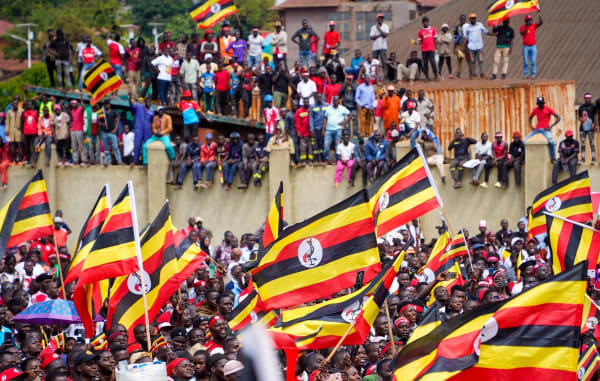
The timing of this enforcement has not escaped public scrutiny. The "flag-waving" trend gained significant momentum in October when Bobi Wine, President of the National Unity Platform (NUP), urged his followers to carry the national flag to rallies as a badge of nationalism and a call for a transition in leadership.
Consequently, the sight of the Black, Yellow, and Red flying in downtown Kampala has become synonymous with political dissent. While the government maintains that the initiative is purely about legal compliance and "patriotism," critics argue that the sudden strictness is a direct response to the opposition’s success in reclaiming the flag as a symbol of the people's power.