FMD Quarantine To Remain In Place As Gov’t Hunts For Shs 670bn For animal Vaccination
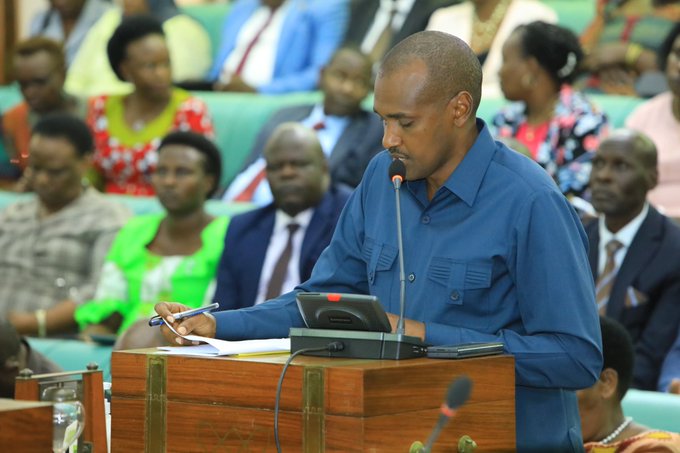
Minister Frank Tumwebaze
The Cabinet is scheduled to convene next week to deliberate on strategies for managing and ultimately eradicating the widespread Foot & Mouth Disease (FMD) in various regions of the nation.
Among the policy options under consideration is the identification of funding sources to acquire vaccines for over 44 million animals, encompassing cattle, sheep, goats, and pigs, nationwide.
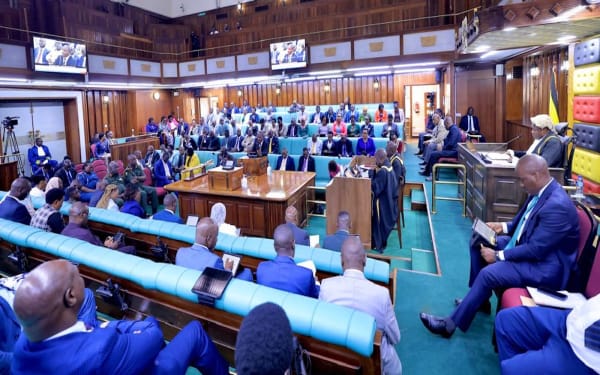
In an address to Parliament on Thursday, Agriculture Minister Hon Frank Tumwebaze disclosed that a substantial amount of $176 million, equivalent to about Shs. 670 billion, is required to procure 88 million doses for the bi-annual vaccination regimen at a cost of USD 2 per dose. Minister Tumwebaze emphasized that the government currently lacks the financial capacity to raise this considerable sum.
"The government acknowledges the financial strain it would impose on the national budget to achieve the requirement for bi-annual mass vaccination," he stated.
Consequently, Tumwebaze informed the legislative body that the Cabinet will explore various measures, including cost-sharing, where farmers would contribute a portion of the funds required for the vaccines.
The Foot & Mouth Disease has been confirmed in 36 districts, all of which are presently under quarantine. These districts include Budaka, Bukedea, Bukomansimbi, Bunyangabu, Butaleja, Fortportal City, Gomba, Ibanda, Isingiro, Kabarole, Kasanda, Kayunga, Kazo, Kiboga, Kibuku, Kiruhura, Kumi, Kyankwanzi, Kyege$Ma, Kyotera, Luuka, Lwengo, Lyantonde, Mbarara, Mbarara City, Mit5rana, Mpigi, Mubende, Nakaseke, Nakasongola, Namisindwa, Ngora, Ntungamo, Rakai, Rwampara, and Sembabule.
While the government allocates a budget for FDM procurement, the vaccines provided under this budget cover a mere 1.1% of the animal population. In response to last year's surge in FMD cases, the ministry procured 2.56 million doses for distribution in 94 districts.
Despite growing discontent among farmers regarding stringent quarantine measures and the closure of animal markets, Minister Tumwebaze indicated that these measures are likely to persist for a considerable duration.
"Quarantines are unpopular and inconvenient for people's livelihoods, but they are necessary as temporary measures to control further spread to alarming and uncontrollable epidemic levels," he explained.
Minister Tumwebaze outlined a plan wherein quarantine restrictions would remain until the country receives FMD vaccines, conducts distribution and vaccinations alongside laboratory testing, after which the restrictions would be lifted. This approach aims to safeguard animals, control FMD, and facilitate the trade of animals and animal products.
Furthermore, the minister emphasized the compulsory nature of vaccination, stating, "Proof of vaccination for every eligible animal will be a pre-condition for animal movement and market access for animal and animal products. And on this, Rt. Hon. Speaker and Colleagues, I seek your support in enabling us to achieve this goal of eradicating FMD from Uganda."