EACOP Engages Buganda Kingdom to Strengthen Community Relations
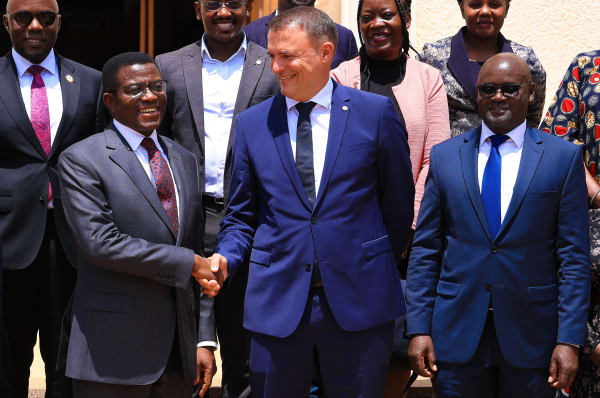
Dulout highlighted that the pipeline project will contribute to job creation, infrastructure improvements, and economic growth
The East African Crude Oil Pipeline (EACOP) Ltd has reaffirmed its commitment to collaborating with the Buganda Kingdom as the crude oil pipeline project advances. A delegation led by EACOP Managing Director Guillaume Dulout met with the Katikkiro of Buganda, Owek. Charles Peter Mayiga, at Bulange, Mengo, to discuss ways to enhance cooperation and address community concerns.
Strengthening Collaboration for Project Success
During the meeting, Dulout emphasized EACOP’s dedication to ensuring the pipeline project benefits local communities while remaining environmentally and socially responsible.
"The EACOP project is not just an infrastructure development; it is a transformative initiative for Uganda and the region. We recognize the critical role of the Buganda Kingdom in ensuring the project’s success," he stated.
Dulout highlighted that the pipeline project will contribute to job creation, infrastructure improvements, and economic growth. He also acknowledged the Buganda Kingdom as a key partner, citing EACOP’s ongoing contributions in the region, such as the construction of Kabajjo Memorial School in Sembabule, support for coffee farming, and the installation of boreholes.
Impact of EACOP in Buganda Region
The EACOP pipeline covers 296 km, passing through 10 districts and 25 sub-counties, with 7 districts falling within Buganda Kingdom’s jurisdiction. These include:
Gomba District (Gomba County)
Kyankwanzi District (Singo County)
Mubende District (Buwekula County)
Sembabule District (Mawogola County)
Lwengo, Kyotera, and Rakai Districts (Buddu County)
Additionally, a portion of land managed by the Buganda Land Board falls within the pipeline's Right of Way, and affected persons have already been compensated.
Buganda Kingdom’s Support for the Project
Katikkiro Charles Peter Mayiga welcomed EACOP’s engagement, expressing the Kingdom’s commitment to ensuring the pipeline project progresses smoothly while addressing concerns from the local population.
"The Buganda Kingdom has always been a proponent of development that benefits our people. We are committed to working with EACOP to ensure that the project is implemented smoothly and that the concerns of our communities are addressed," he said.
Mayiga also emphasized the importance of technology transfer, highlighting how ICT is becoming a dominant sector and that Uganda would greatly benefit from technological advancements tied to the oil pipeline project.
He further appreciated the employment opportunities created by EACOP, noting that job creation is crucial, particularly for Uganda’s youth, as reflected in the 2024 population census.