EACOP and Partners Invest in Uganda’s Future through Student Sponsorship
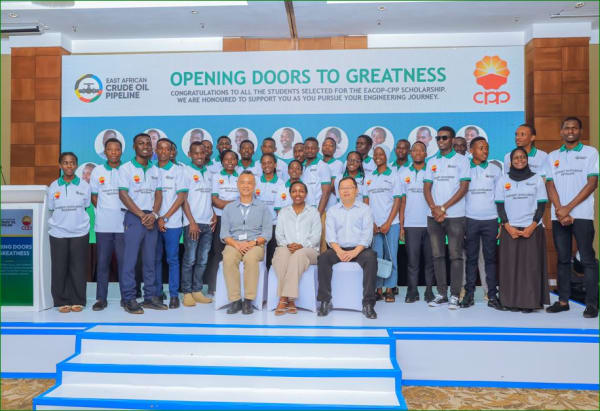
The programme will provide financial assistance to 28 students from Makerere and Kyambogo Universities
The East African Crude Oil Pipeline (EACOP) Ltd., in a joint venture with its key contractor, China Petroleum Pipeline (CPP), has initiated a new university scholarship programme.
This initiative is designed to empower talented but financially challenged engineering students across Uganda. The programme will provide financial assistance to 28 students from Makerere and Kyambogo Universities, helping them to complete their academic journeys.
This effort highlights EACOP and CPP’s dedication to developing local talent, going above and beyond the commitments in their existing agreements with academic institutions.
A Commitment to Local Talent and Community
The selection of the scholarship recipients was conducted through a fair and thorough process. Applicants were assessed on their academic performance, financial circumstances, passion for engineering, and their desire to create a positive impact on their communities.
A special emphasis was placed on candidates from the ten districts located along the pipeline route, with seven of the scholarships being awarded to students from these areas.
Eileen Baguma, EACOP’s HR & Corporate Affairs Director, stated that the programme showcases the company's long-term investment in Uganda's engineering talent. "We are not only building infrastructure," she said, "but also creating opportunities for young Ugandans to excel in the oil and gas sector."
Part of a Broader National Development Plan
The scholarship initiative is just one part of EACOP’s extensive strategy to promote national content. This comprehensive approach involves building strong partnerships with various professional and academic bodies, including the Uganda Petroleum Institute Kigumba (UPIK), Makerere University, Kyambogo University, and the Institute of Surveyors of Uganda.
To date, EACOP and its partners have successfully trained 82 graduate trainees. Additionally, their "Train the Trainer" programme has provided more than 532 hours of instruction to university lecturers and professors, ensuring that local curriculums are updated with the latest industry technologies and best practices. These initiatives are all geared towards ensuring the EACOP project contributes to both infrastructure and sustainable human capacity development in Uganda and Tanzania.