Centenary Bank MD Urges CEOs to Take Bold Steps in Sustainability Efforts

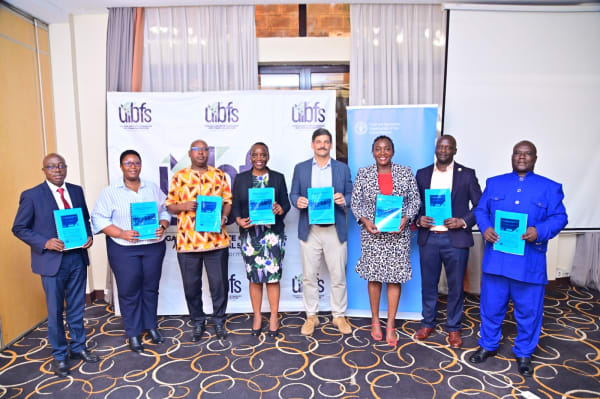
5th Annual CEO Forum was held at Mestil Hotel
Fabian Kasi, Managing Director of Centenary Bank, has called on Chief Executive Officers (CEOs) in Uganda to take decisive action in addressing climate change. Speaking at the 15th Annual CEO Forum at Mestil Hotel and Residences in Kampala, Kasi emphasised the need for strong leadership to drive sustainability and create legacies that extend beyond their tenures.
“There is a need for bold leadership to champion sustainability. We know that the businesses we lead are not for our times alone but for many generations to come,” Kasi said. His message underscored the importance of creating lasting impact through sustainable business practices and the significance of preparing successors who can continue championing these initiatives.
Kasi noted, “A leader’s lasting value is measured by succession. Therefore, interest is not in what we have done but how it will be done even when we are long gone.” He added that true success lies not just in individual accomplishments but in fostering leaders who can achieve great things collaboratively, thereby ensuring the continuity of impact and significance.
The CEO Forum, held under the theme “Only One Earth: Our Purpose and Mandate,” attracted over 100 company heads who discussed sustainable approaches to combat climate change. During the discussions, Kasi encouraged business leaders to foster unity and partnerships within the business ecosystem, which includes stakeholders from government, the private sector, and local communities.
“We are working within an ecosystem where collaboration is essential for our survival; without it, we risk perishing together,” Kasi stressed. He highlighted that engaging all stakeholders is critical in driving meaningful and long-lasting impact, pointing out the necessity of incorporating sustainable practices in business operations.
Kasi also advocated for private sector investment in Sustainable Development Goals (SDGs), suggesting that SDG-related risks can present unique opportunities. He outlined potential benefits for businesses, including access to funding, partnerships, and collaboration, all of which could help in achieving measurable and sustainable impact.
He said, “The opportunities that could arise from the risks of investing in SDGs are numerous, including access to funding, partnerships, collaborations, and the ability to measure impact. It’s essential to understand the kind of impact we are creating, especially in addressing issues like inequality and working towards ending poverty.”
Centenary Bank, Uganda’s leading commercial microfinance bank, was presented as a case study in responsible banking. The bank is committed to Environmental, Social, and Governance (ESG) principles through its sustainable financial products, including renewable energy loans, clean cooking solutions, and agricultural production loans. Additionally, the bank is involved in environmental conservation efforts such as tree planting and partnerships aimed at reducing its carbon footprint.
Each year, Centenary Bank dedicates 2% of its previous year’s profits to Corporate Social Investment (CSI). These initiatives support health programs, including cancer prevention, sanitation projects, and the annual Cancer Run with Rotary. Such efforts reflect the bank’s dedication to usability, accessibility, affordability, and sustainability—pillars that align with both local and global goals to promote financial inclusion.