Census Data to Support Implementation of Government Development Programs:
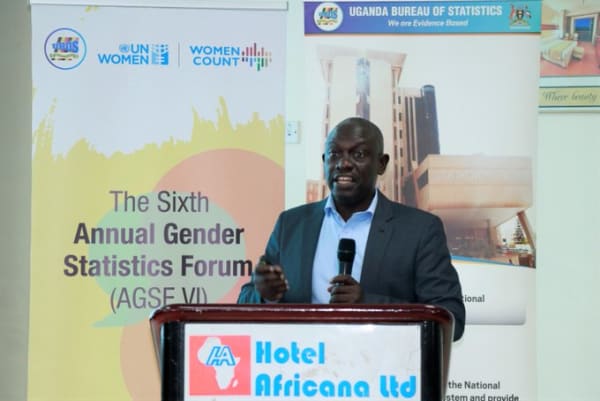
Dr. Ssenono Vincent
The upcoming National Population and Housing Census, scheduled for May 10th, 2024, is poised to provide crucial data that will significantly enhance the implementation and monitoring of government development programs, particularly the Parish Development Model (PDM) initiative.
Dr. Ssenono Vincent, Head of the Department of Demography and Social Statistics at the Uganda Bureau of Statistics (UBOS), highlighted the importance of the census in a recent radio interview. "This is the first census that will give us a clear insight into government development programs such as the Parish Development Model," Dr. Ssenono stated.
The census aims to bridge the existing knowledge gap on the PDM program's impact by gathering in-depth data on its beneficiaries. This data will provide a clearer picture of the program's effectiveness in achieving its goal of transforming Uganda into a commercialized economy.
Concerns have recently emerged regarding the lack of data on how PDM funds are being utilized at the parish level. As Prof. Ezra Suruma, a key figure behind the program, cautioned, "Without effectively tracking the utilization of the funds at the parish level, this money will end up lost as expenditure, rather than an investment." The 2024 census directly addresses this concern by incorporating questions that will shed light on the program's reach and effectiveness.
Dr. Ssenono elaborated on the specific details the census will capture, stating, "We shall get data on how many people have benefitted from PDM, where they are located, and their age bracket. We shall also be asking them how much money they have received and how they have used it." This granular data will illuminate the program's geographical spread, target demographics, and its impact on beneficiaries' livelihoods.
The census will extend its reach beyond the PDM program, encompassing a broader spectrum of government initiatives. It will capture data on programs like Emyooga and the Women and Youth Empowerment funds managed by the Ministry of Gender, Labor and Social Development.
Furthermore, the census will delve into the often-overlooked aspects of Uganda's economy by capturing data on the subsistence economy, where an estimated 39% of households currently operate. This data will be crucial for policymakers to understand the economic landscape more comprehensively and design programs that cater to these often-marginalized communities.