Breaking: Government Halts Trade Order Crackdown after Backlash from Churches, Mosques and Traders
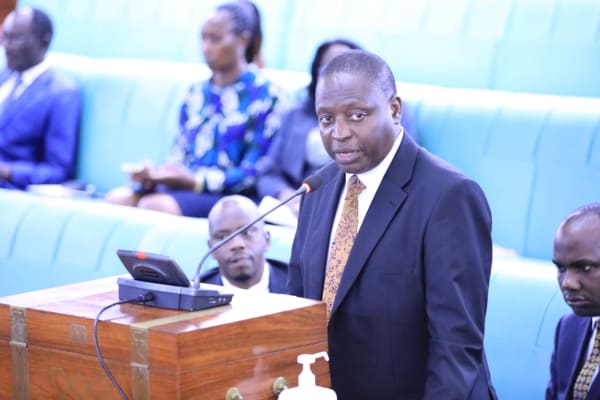
David Bahati
Government has temporarily stopped the enforcement of trade order operations across the country following strong criticism from religious leaders, traders and Members of Parliament over the way the exercise was carried out.
State Minister for Industry David Bahati announced the suspension while addressing Parliament, saying more consultations were needed before the operation could continue. He said the government would meet stakeholders again at the end of June and introduce a revised approach in July.
“We have now suspended the trade order until we have done more consultations and will have a final meeting at the end of June so that at the beginning of July, we have a more refined way of operation,” Bahati said.
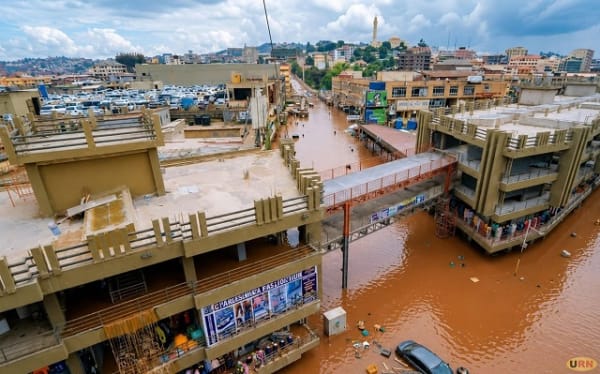
The trade order operation had been launched to remove street vendors and enforce use of government-built markets, many of which officials say remain empty despite large public investment.
What started in Kampala later spread to other towns and districts, with enforcement teams clearing roadside traders, informal businesses and structures considered to be operating outside approved spaces.
However, the exercise quickly drew criticism after churches, mosques and prayer centres were also affected, with some being demolished or threatened with closure. Religious leaders protested, arguing that places of worship were being unfairly treated like illegal vending spaces.
Bahati admitted that mistakes had been made and said churches and mosques should never have been handled in the same way as roadside vendors.
“Churches and mosques were not supposed to be bundled with vendors because they are not in the business of vending,” he said.
He also revealed that government had apologised to the Inter-Religious Council of Uganda after reports that some enforcement officers made offensive remarks during the operation.
“We did apologize to the religious leaders because sometimes when our people were moving during this operation, they were making reckless comments, telling Pentecostals that you go back to where you came from, telling the Muslims that they were making a lot of noise. We apologized,” Bahati said.
Several MPs criticised the operation, saying it was rushed and poorly planned, leaving many people without businesses or income.
Kira Municipality MP Ibrahim Ssemujju raised concerns about the destruction of livelihoods and asked government what support would be given to those affected.
Erute South MP Jonathan Odur said government failed to consult key stakeholders before launching the exercise.
“Everyone wants this country to be orderly. But you don't just wake up and decide to take actions, you must consult,” Odur said.
“This trade order was a matter of shooting and aiming after. There was no consultation. Why start something before engaging the key stakeholders?” he added.
Bahati maintained that the intention was to restore order and encourage proper use of public markets, but acknowledged that implementation had created unnecessary tension.
For now, traders and religious institutions affected by the crackdown are expected to get temporary relief as government rethinks the next phase of the operation.