Batwa and persons living with disabilities in Uganda are struggling to access quality education and healthcare, despite the government adopting laws and policies to improve the livelihoods of marginalised groups, a new study by Minority Rights Group International (MRG) has revealed.
The study, conducted in the districts of Bundibugyo, Kabale, Kanungu, Kisoro and Rubanda in south-western Uganda, as well as Kampala, found the challenges to quality education and healthcare access for the two groups to be multifaceted.
School drop-out rates among Batwa children stand at nearly 58 percent. Factors such as discrimination from other ethnic groups, sexual harassment of Batwa girls, poverty, inadequate access to scholastic and sanitary materials, and hunger among others combine to condemn Batwa children to high school drop-out rates.
Some of the same factors also undermine the Batwa’s access to good healthcare. Discrimination from other communities means that the Batwa are often shunned by medical workers when they visit health facilities, and poverty means that they cannot afford to visit private alternatives. Additional barriers to healthcare access are long distances to the few government facilities that serve communities in which the Batwa live.
To improve access to quality education and healthcare for the Batwa, Agnes Kabajuni, MRG’s Africa Regional Manager says that the first step is to know the magnitude of the task by getting more data.
‘Data on access to services for the Batwa community is very hard to come by. Not to leave them behind, clear disaggregated data on education and health care need to generated. Ascertaining the impacts Covid-19 makes the need more pressing than ever before. This study has attempted to contribute to this,’ Kabajuni notes.
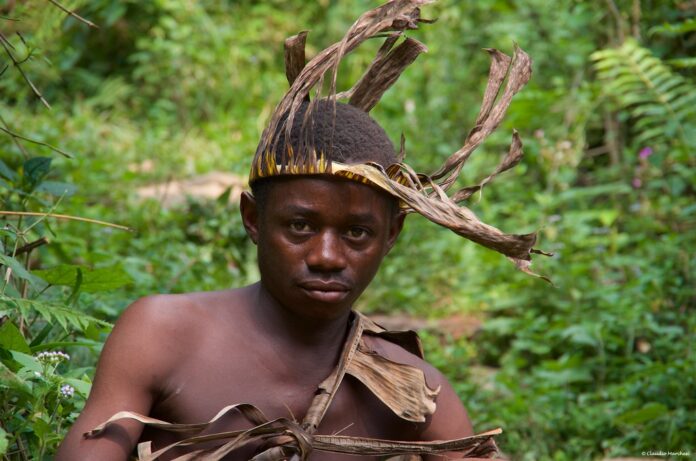
The Batwa people are a historically marginalised minority community in Uganda. They were evicted from their ancestral lands within the current Bwindi Impenetrable National Forest in the early 1990s in the name of conservation. Further, the Batwa face poverty and social exclusion in their areas of displacement in the south-west of the country. The COVID-19 pandemic is making a bad state of affairs even worse. Most Batwa children have not had access to the reading materials distributed by the government during the first lockdown.
The main barrier regarding education for persons living with disabilities is the unsuitability of school facilities to cater for their particular needs. Classroom blocks and toilet facilities do not have ramps, support rails, adapted seats among others. These challenges are then compounded further by inadequate special needs teachers, and lack of recognition of the importance of special needs education by the community.
Poor physical accessibility of health facilities also affects persons living with disabilities’ access to healthcare. Like schools, many health facilities are not designed to cater for the needs of PWDs. Other challenges affecting access of persons living with disabilities to healthcare are negative attitudes of health workers towards persons living with disabilities, special needs communication and information barriers as well as other issues.
The study was carried out in partnership with Africa International Christian Ministries (AICM), Action for Batwa Empowerment Group (ABEG) and Action for Youth with Disabilities in Uganda (AYDU) with financial support from the Ministry for Foreign Affairs of Finland.
Denis Mucunguzi, the Programmes Manager at AICM, says that as education and healthcare are fundamental human rights, there needs to be a concerted effort by all stakeholders, starting with the government, to improve the quality of access to these basic services for the Batwa and persons living with disabilities.You can read the full Uganda briefing here: http://minorityrights.org/uganda-education-health-pr/