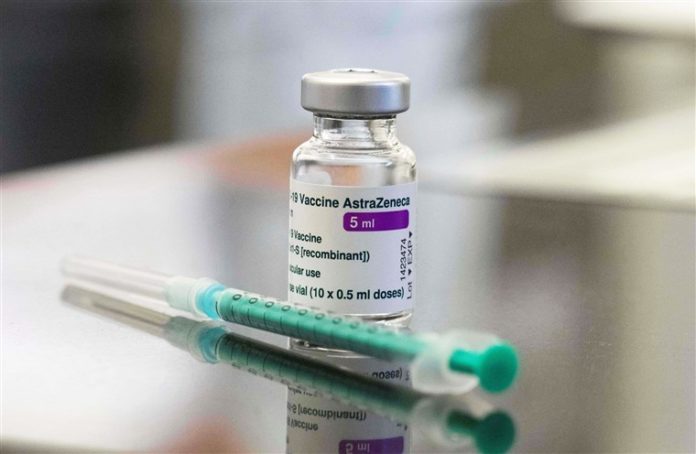
Deliveries of vaccine supplies under the COVAX programme started in February, and most countries in Africa signed up. On March 10th 2021, Covid-19 vaccination with the AstraZeneca vaccine rolled out in Uganda.
The vaccination campaign in Uganda with the AstraZeneca vaccine continues despite the vaccine receiving widespread backlash, suspension and banning in both some European and African countries. These countries say that the vaccine is not safe for vaccination.
European countries that have suspended or banned the use of AstraZeneca vaccine.
In France, over three-quarters of the vaccine remain unused while in Germany, the fraction shoots also to two-thirds of the AstraZeneca vaccine.
Austria, Italy, Bulgaria, Romania, Estonia, Lithuania, Luxembourg, Latvia and non-European Union (EU) countries Norway and Iceland.
Thailand also suspended the AstraZeneca vaccine.
Why has the vaccine been suspended in the aforementioned countries?
In Denmark, AstraZeneca was suspended for 14 days due to fears of serious adverse reactions. This came after several reports of blood clots following vaccinations and the death of a 60-year-old woman who received a shot and then died after developing a blood clot, according to the Danish news agency Ritzau.
In Italy, another AstraZeneca batch raised concern after both a 43-year-old serviceman died of a heart attack, and a 50-year-old policeman died following their vaccinations from the ABV2856 batch.
The rest of the European countries have also banned the use of the vaccine as a precaution after similar reports of blood clots, which European drug regulators are still investigating.
What about Africa?
On 13th March, the Health Minister of Democratic Republic of Congo (DRC), Eteni Longondo, said in a statement that the country had postponed vaccination which was due to start on March 15th, citing similar precautionary measures as the European countries.
South Africa halted the use of the AstraZeneca vaccine that was due to be rolled out last month in the country after a new study revealed the vaccine was less effective against the South African variant of the coronavirus. South Africa opted out for the Johnson and Johnson vaccine.
Tanzania and Madagascar have said they have no plans to acquire vaccines, and Burundi says that at the moment, they don’t need vaccines.
Guinea received 200,000 doses of China’s Sinopharm COVID-19 vaccine an alternative to AstraZeneca.
However, Nigeria’s National Primary Healthcare Development Agency (NPHCDA) said on Thursday that the AstraZeneca vaccines in the country are safe and vaccination would continue.
Rwanda, Kenya, Sudan, Uganda and more African countries have all rolled out vaccination of their populations with the AstraZeneca vaccine.
What does AstraZeneca and World Health Organization say?
AstraZeneca said earlier this week its vaccine is subject to strict and rigorous quality controls and that there have been “no confirmed serious adverse events associated with the vaccine.”
The World Health Organization said on Friday (Mar 12) that there was no reason to stop using AstraZeneca’s COVID-19 vaccine after several European countries suspended the roll-out over blood clot fears.
The WHO said its vaccines advisory committee was currently looking at safety data and stressed that no causal link has been established between the vaccine and clotting.
“AstraZeneca is an excellent vaccine, as are the other vaccines that are being used. We’ve reviewed the data on deaths. There has been no death, to date, proven to have been caused by vaccination,” WHO spokeswoman Margaret Harris told reporters at a briefing in Geneva.
The European Medicines Agency (EMA), an agency of the European Union in charge of the evaluation and supervision of medicinal products, in a statement released on Thursday, described the Danish Health Authority’s decision as a “precautionary measure”, but stressed there was “currently no indication that vaccination has caused these conditions”.