Africa Seed Summit Calls for Stronger Local Seed Systems and Targeted Agricultural Investment
Africa Seed Summit
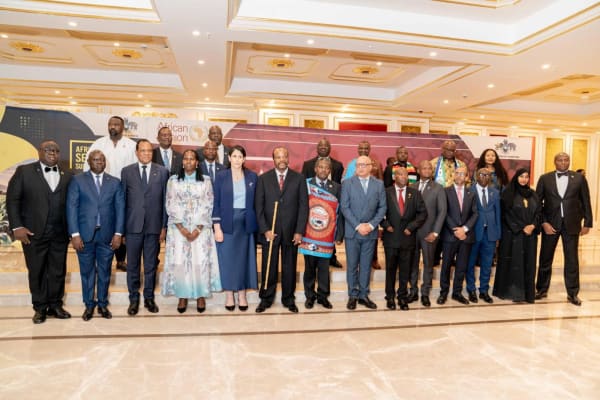
Leaders and officials gathering at the inaugural Africa Seed Summit in Eswatini called on African nations to bolster local quality seed production and ensure agricultural investment directly reaches farmers to build a self-reliant food system.
The three-day summit, held from October 5 to 7, 2026, under the theme “Resilient Seed Systems for a Food Secure Africa,” was convened by the African Union Commission (AUC) and hosted by the Kingdom of Eswatini.
Officially opening the event on October 6, His Majesty King Mswati III, alongside AUC Deputy Chairperson H.E. Ambassador Selma Malika Haddadi, framed seed quality as a fundamental driver of the continent's agricultural future and food sovereignty.
“No fertilizer, irrigation or machinery can make up for poor seed,” King Mswati III said during his address, emphasizing that continental control over seed production, investment, and distribution will dictate long-term food security.
Regional Cooperation and Infrastructure
The addresses highlighted the multi-faceted role of agricultural development in addressing economic and social needs across Africa—from securing dependable harvests for farmers to expanding economic opportunities for youth and providing stable food supplies for households.
King Mswati III urged African states to leverage regional strengths and collaborate across national borders to achieve continent-wide self-sufficiency.
“Each nation must maximize the crops for which it is best suited and where one country shows particular strength, the other Member States must support it, because all of us are Africans. In the end, what we want is to see a successful Africa that is food secure,” he stated.
To support this vision, he outlined a coordinated agricultural framework incorporating:
Infrastructure development: Expanded soil testing, investment in dams and irrigation, enhanced crop storage facilities, and improved transport networks to move food efficiently across markets.
Trade and financing: Integration with the African Continental Free Trade Area (AfCFTA) and increased support from financial institutions and development partners for viable farming initiatives.
Climate resilience and conservation: The preservation of indigenous genetic resources alongside the development of climate-resilient crop varieties to protect against drought and pests.
Eswatini’s Local Initiatives
Sharing domestic efforts, King Mswati III highlighted Eswatini’s ongoing projects, including upgrades to its national gene bank, seed and germplasm multiplication initiatives, and training programs aimed at enabling local farmer groups to engage in small-scale seed production. He invited further cross-border knowledge sharing and investment to scale these efforts.
Closing his remarks, King Mswati III stressed the urgency of translating regional policies into actionable measures on the ground.
“Frameworks that remain on paper feed no one,” he said.